When children leave home, the family house often feels different. Rooms once full of activity may now sit unused, and belongings can seem overwhelming. This is where downsizing after empty nest becomes not just a practical step, but a meaningful way to embrace a new stage of life.
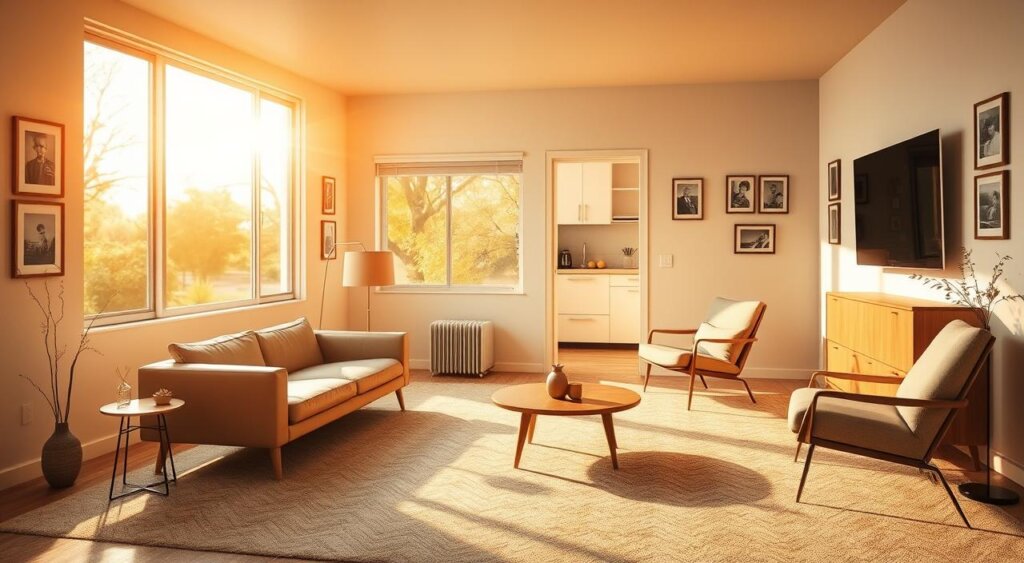
This long-form guide walks you through evidence-based methods, mindset shifts, and room-by-room strategies to simplify your home. Whether you want to reclaim space, prepare for a move, or just feel calmer day to day, you’ll find practical steps that truly work.
Key Takeaways
- Downsizing after children leave helps create calmer homes and clearer routines.
- Research shows homes often contain far more items than we realise.
- Small donations and steady routines bring lasting change.
- Proven methods like Swedish Death Cleaning and KonMari work at any age.
- Consistent habits prevent clutter from building up again.
Why Downsizing After Empty Nest Can Simplify Life
Once the house quiets down, space reflects your current lifestyle. A smaller, more intentional environment can make routines easier and lift emotional weight.
- Calm spaces support wellbeing – clutter is linked with stress and poor sleep.
- Extra rooms gain purpose – hobby spaces, guest rooms, or home offices.
- Less maintenance – fewer belongings mean easier cleaning and organising.
| Benefit | Emotional Gain | Practical Tip |
|---|---|---|
| Less clutter | Calmer mind and mood | Start with one drawer or shelf |
| Reclaimed space | Renewed purpose | Convert a bedroom to a hobby area |
| Fewer items | Relief from emotional weight | Donate quality items |
| More time | Social visits and hobbies | Short, daily tidy sessions |
Mindset Shifts for Downsizing After Empty Nest
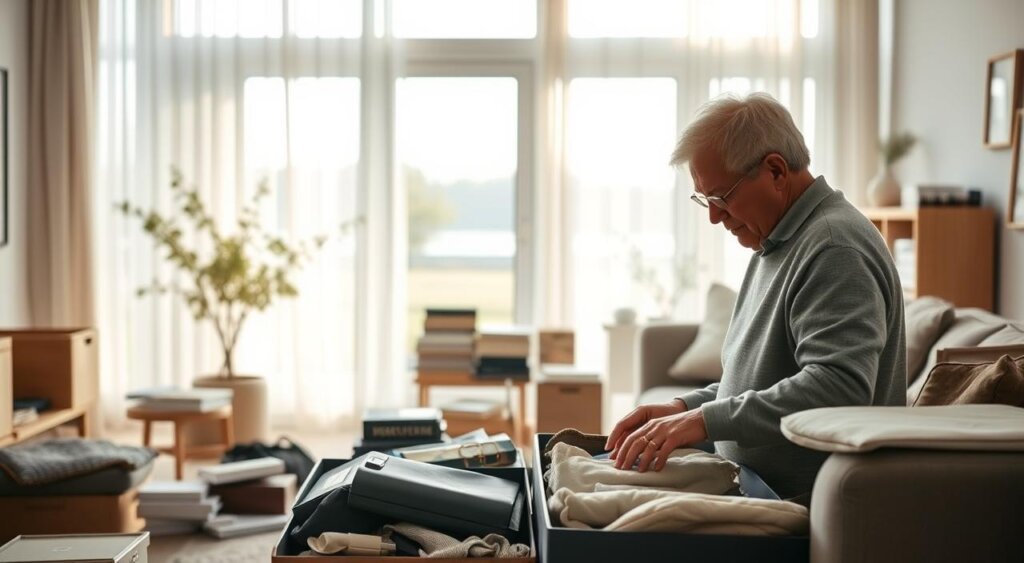
Downsizing isn’t only about getting rid of things. It’s about shifting from “I might need it one day” to “Does this serve my life now?”
- Test question: Would I buy this again today?
- Scarcity thinking: Duplicate tools or clothes kept “just in case” often stay unused.
- Gentle self-talk: Letting go is not wasteful—it’s choosing freedom.
| Mindset Cue | Test Question | Action | Outcome |
|---|---|---|---|
| “Just in case” | Would I buy this again today? | Recycle or donate duplicates | Less clutter |
| Sentimental overload | Does one item capture the memory? | Keep one, photograph the rest | Space reclaimed |
| Fear of waste | Who benefits if I pass this on? | Donate to charity | Meaningful giving |
📌 Organisations like Dress for Success accept clothing donations that directly help others.
Getting Started Without Overwhelm
The biggest mistake in decluttering is trying to do everything at once. Instead:
- Start small zones – one shelf, drawer, or tabletop.
- Use the ski slope method – move top-to-bottom, left-to-right across a room.
- Four-box clarity – label boxes: Keep, Donate, Sell, Recycle.
- Short daily sessions – 20 minutes a day builds momentum without fatigue.
| Action | Why It Helps | Quick Tip |
|---|---|---|
| Start with a small zone | Builds momentum | Take before/after photos |
| Four-box method | Speeds up decisions | Label clearly |
| Reset at the end | Keeps next start easy | Fresh liners & markers ready |
Proven Methods for Downsizing After Empty Nest
Several well-known approaches can be combined depending on your pace and energy:
| Method | Where to Start | Core Rule | Best For |
|---|---|---|---|
| Swedish Death Cleaning | Attics & basements | Remove duplicates first | Reducing burden on family |
| KonMari | Clothes → books → paper → misc → sentimental | Keep what sparks joy | Neat, category resets |
| Minimalism Game | Anywhere | Remove more each day (up to 465 in 31 days) | Habit building |
| Packing Party | Whole home before move | Keep only what you unpack in 3 weeks | Pre-move rightsizing |
These methods make downsizing less stressful and more structured.
Room-by-Room Downsizing Tips

Attics, Lofts, and Garages
Start with forgotten storage spaces. Clear large items first, label what stays, and set review dates for kept boxes.
Wardrobes and Drawers
Keep only current, comfortable clothes. Donate unused suits and “someday” sizes.
Kitchen and Cupboards
Remove duplicate gadgets. Prioritise versatile tools that free counter space.
Paperwork and Books
Digitise essential documents, recycle duplicates, and donate books you won’t reread.
| Room | Quick Win | Final Step |
|---|---|---|
| Attic/Garage | Remove duplicates | Label boxes |
| Wardrobe | Try on suits | Keep current favourites |
| Kitchen | Cull gadgets | Free prep space |
| Books & Papers | Scan documents | Donate unread books |
If you decide to replace beds during downsizing after empty nest, consider eco-friendly mattress disposal to ensure old items don’t end up in landfill.
Sentimental Items: Memories Without Clutter
Sentimental objects are often the hardest to release. Use these strategies:
- Save small keepsakes for last – decision-making improves with practice.
- Create one memory box – record short notes about items.
- Photographs – keep highlights, release duplicates or blurred prints.
- Give with purpose – gift items to family or donate meaningful pieces.
Rule: if your memory box is full, remove one item before adding another.
Staying Clutter-Free
Decluttering isn’t a one-time project—it’s a lifestyle.
- One in, one out rule – when something new enters, release something old.
- Donation box habit – keep a labelled box in a visible place.
- Monthly nudge – add a calendar reminder for dropping off donations.
- Seasonal reassessment – review rooms every few months.
💡 Rethink costly storage units: In the US, over \$48 billion is spent annually on self-storage. Ask if what you’re keeping is worth the price of holding onto it.
The UK charity British Heart Foundation offers free collection for furniture and larger donations.
Conclusion
Downsizing after empty nest is not about loss—it’s about creating space for the life you’re living now.
Start with one action today: a shelf, a drawer, or a single room. Mix methods like Swedish Death Cleaning for storage areas, KonMari for sentimental items, and the Minimalism Game for building habits.
By letting go of excess, you create calmer rooms, more purposeful routines, and a home that matches your current stage of life. Most importantly, it gives you freedom to focus on experiences, not objects.




 call now