Choosing the right bedding for cold nights is about more than a cosy duvet. We spend nearly a third of our lives in bed, so warmth, longevity and ethical manufacture all matter.
This UK-focused guide explains what sustainable winter bedding means in practice: the fibres and casings used, how products are made, how long they last and what happens at the end of their life.
We’ll also show why the environmental impact of bedding goes beyond fibres. Processing, transport, washing frequency and replacement cycles all affect that impact.
Comfort and sleep quality are non-negotiable. The right fill and casing will regulate temperature, manage moisture and keep you snug without feeling clammy.
Next, the article follows a clear decision pathway: what to look for, a comparison of sustainable bedding options, signs of greenwashing, then a practical choosing framework and a UK shortlist featuring Panda London, The Wool Room, EarthKind, SIMBA, Dip & Doze and White & Green.
We’ll also cover certifications and labelling, and offer choices for different budgets and sleepers so you can match comfort to real-life needs.
Key Takeaways
- Sustainable winter bedding balances warmth, breathability and longevity.
- Look past fibres to processing, transport and replacement cycles when judging impact.
- Choose fills and casings that regulate temperature to protect sleep and comfort.
- Watch for clear certifications and avoid vague sustainability claims.
- This guide uses UK examples to make shopping simpler and more transparent.
What to look for in sustainable winter bedding that lasts
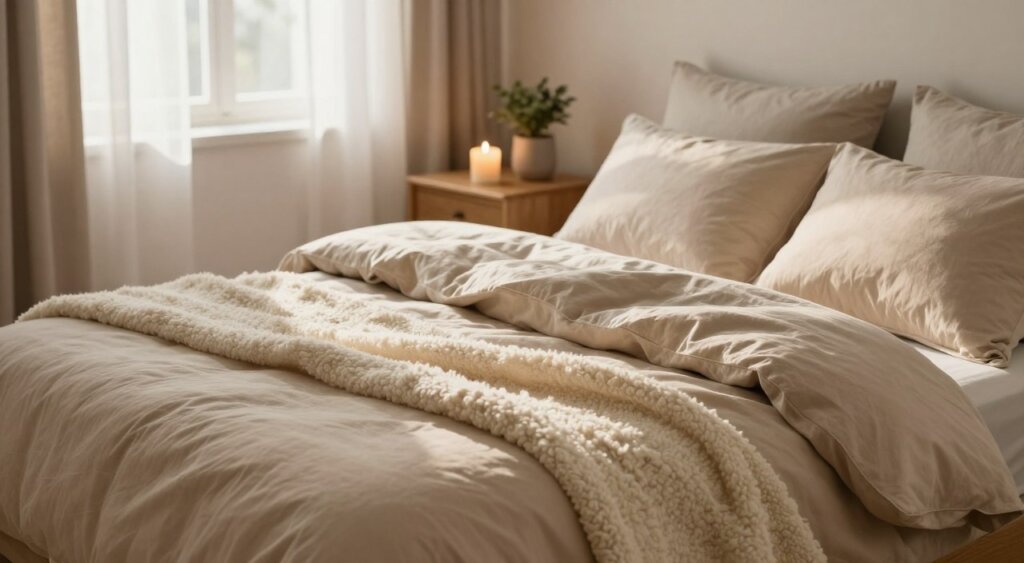
True sustainability in winter bedding comes from transparency, proven testing and design that avoids quick replacement. Look for products that balance warmth, breathability and longevity so comfort and sleep stay reliable for years.
Transparency and traceability checks to ask brands
Ask these eight practical questions so a brand’s claims are evidence-based:
- Who makes the product?
- What is the minimum worker age across the supply chain?
- Can they share a supplier list or map?
- How is a safe, healthy working environment ensured?
- Which sustainable fibres and fills are used?
- What steps reduce energy, water and waste?
- How many collections do they release each year?
- Do they offer take-back, repair or recycling schemes?
Certifications that matter in the UK market
GOTS (global organic textile standard) shows certified organic supply chains. OEKO-TEX tests for harmful chemicals. Fairtrade helps labour conditions, while B‑Corp assesses wider governance and impact — SIMBA is the first UK sleep brand with B‑Corp status.
Warmth, longevity and end-of-life
Warmth without overheating depends on breathability, moisture‑wicking and thermal regulation. Longer‑lasting products mean fewer replacements, less washing and lower energy use at home.
At the end of life, prefer single‑fibre constructions and avoid heavy coatings that block biodegradability. In the next section we’ll compare which options suit hot or cold sleepers and different skin sensitivities.
eco friendly bedding materials compared for cold UK nights
For cold UK nights, pick fills and fabrics that balance insulation with breathability and low-wash upkeep. Below is a concise comparison of popular options so you can match warmth to real-world sleep and care needs.
British wool: natural insulation and allergy-friendly comfort
Wool insulates even when damp and wicks moisture away from the body. It regulates temperature well, so you stay warm without overheating.
The Wool Room uses British wool and is the only natural option approved by Allergy UK. Their clip-on layers let you adapt between summer and winter.
Organic cotton and sheets: soft, breathable, lower pesticide use
Organic cotton gives the classic soft-to-crisp feel for reliable sheets. It avoids synthetic pesticides and usually uses less water than conventional cotton.
Dip & Doze uses GOTS organic and Fairtrade cotton. For longevity, choose quality weaves — White & Green’s 300 thread count sateen is strong and soft and will last years with proper care.
Linen (flax): efficient production and year-round balance
Linen is breathable, slightly textured and durable. Flax needs minimal water and chemicals in production, making it a good pick for those who overheat under heavy winter layers.
Dip & Doze offers OEKO‑TEX certified linen options for a breathable, long‑lasting feel.
Bamboo: lyocell vs “bamboo viscose” processing
Bamboo lyocell tends to use closed‑loop solvent recovery and feels silky. “Bamboo viscose” can involve heavier chemical processing, so read product pages carefully before you buy.
Recycled feather & down
Recycled fills give hotel‑style loft and warmth while diverting waste. EarthKind’s reclaimed down expands after a day and any mild odour usually fades as it airs.
Recycled synthetics
Recycled polyester reduces landfill and can lower upfront cost. The trade-off is microplastic shedding during washing and harder end‑of‑life options.
- Hot sleepers: linen or light wool layering.
- Cold sleepers: wool or recycled down for loft and heat.
- Allergy-prone: British wool or well‑certified organic cotton products.
Greenwashing red flags and material treatments to avoid
Many product labels promise green credentials, but the truth often hides in small print. Shoppers should focus on clear facts, not single-word claims that suggest sustainability without proof.
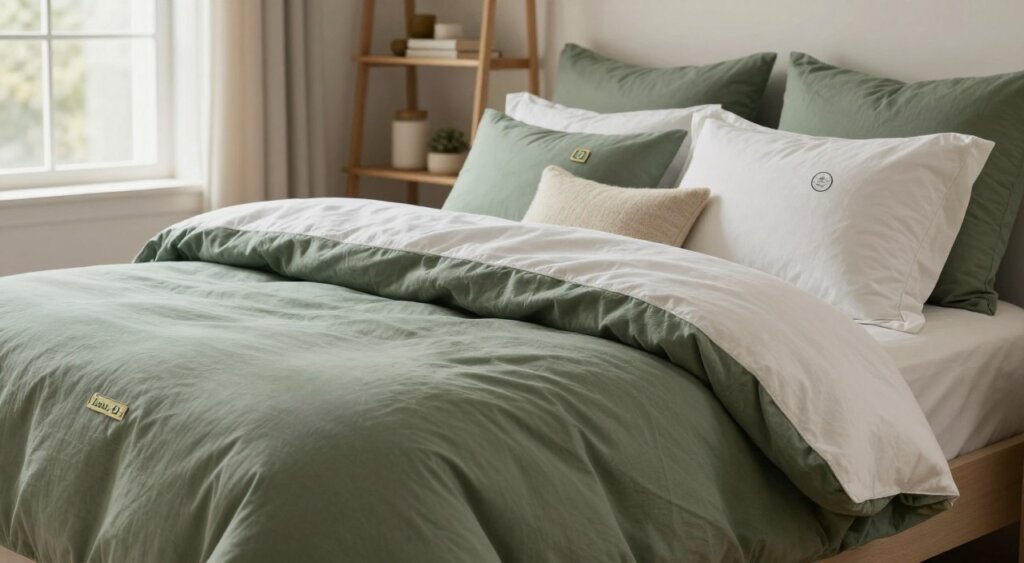
Spot vague claims and check the facts
Avoid labels that use terms like “natural”, “eco” or “green” with no supporting detail. Look for fibre content, processing notes and recognised certification logos instead.
Chemical treatments to watch for
“Machine-washable” wool is often treated with processes such as Hercosett. That involves stripping scales and adding a polymer finish. The result can reduce breathability, kill moisture‑wicking performance and stop biodegrading at the end of life.
Coatings, dyes and hidden blends
Be wary of stain‑resistant or water‑repellent finishes and unclear fabric blends like “cotton-rich”. These make recycling or composting harder and increase the environmental impact when a product reaches landfill.
- Check full fibre lists, not headlines.
- Ask brands how they process and finish their fabrics.
- Prefer single‑fibre construction where possible.
- Remember recycled synthetics still shed microplastics over time.
How to choose the right bedding set for your sleep style and budget
Start with the feel you want, then build warmth and longevity into the set you buy. That way you pick sheets and layers that match your comfort, not just a high tog number.

Best picks by material and feel
Bamboo lyocell gives a silky handfeel — try Panda London for soft sheets and the Cloud Duvet. British wool offers loft and steady warmth from The Wool Room.
Crisp cotton suits fans of the hotel-sheet look; Dip & Doze use GOTS organic cotton. For a relaxed, textured feel, choose linen options or White & Green’s 300-thread-count sateen for durability.
Winter warmth build
Pick a mid-tog all-season duvet or two clip-together layers rather than one very high tog. Layer a light duvet, a wool blanket and a heavier quilt for flexible temperature control at night.
Quick UK shortlist and buying steps
- Panda London — bamboo softness and light warmth.
- The Wool Room — adaptable British wool layers.
- EarthKind — recycled down alternative.
- Dip & Doze — GOTS organic cotton sheets.
- White & Green — long-lasting cotton sateen sets.
- SIMBA — B‑Corp, recyclable sleep products.
Invest first in sheets and pillowcases, then upgrade duvet and pillows. Ask about fibre composition, coatings, certifications and take-back options before checkout. Choose the feel you love, check transparency and set up warmth for your home and sleep temperature.
Conclusion
.
The best winter choices combine proven warmth, clear proof and a design built to last. Choose fills with a track record for insulation, check traceability and prefer products that avoid heavy finishes which block breathability and end‑of‑life options.
Pick what feels right and will be used night after night. Durability and quality cut replacements and lower long‑run impact, so buy for years, not just a single season.
Shop by feel, then layer for tog and temperature. Double‑check fibre lists, processing notes and certifications to avoid vague claims. Compare the UK shortlist, ask the traceability questions from this guide and invest in bedding that gives reliable comfort all winter.




 call now