Start the year with a simple, calm plan that helps your room feel lighter without a full overhaul. Interior designers framed the start of 2026 as a natural moment to declutter and take stock, and this guide treats January as an edit, not a makeover.
This how-to focuses on small, intentional edits that add up to a more restful space. You will find quick tasks — a one-minute scan, keep/store/donate rules and surface resets — alongside higher-impact upgrades like lighting and storage swaps.
Bedrooms matter because surroundings shape sleep and mood. The aim is to remove daily friction while keeping the room warm and inviting through texture, considered decor and practical organisation.
The advice is designer-informed, citing voices such as Ami McKay and Lauren Gilberthorpe, and concentrates on what makes the biggest impact fast. Read on for intention-setting, a post-holiday clear-out, layout tweaks, textiles, lighting and simple maintenance ideas that make a real difference at home.
Key Takeaways
- A minimalist reset can calm a room without a renovation.
- Small, intentional edits add up to better sleep and mood.
- Use quick steps today: scan, sort, and clear surfaces.
- Focus on lighting and storage for fast impact.
- Minimalist means considered, not bare — keep warmth and texture.
- Designer-informed tips help you make sensible changes at home.
Set your intention for a calmer bedroom in 2026
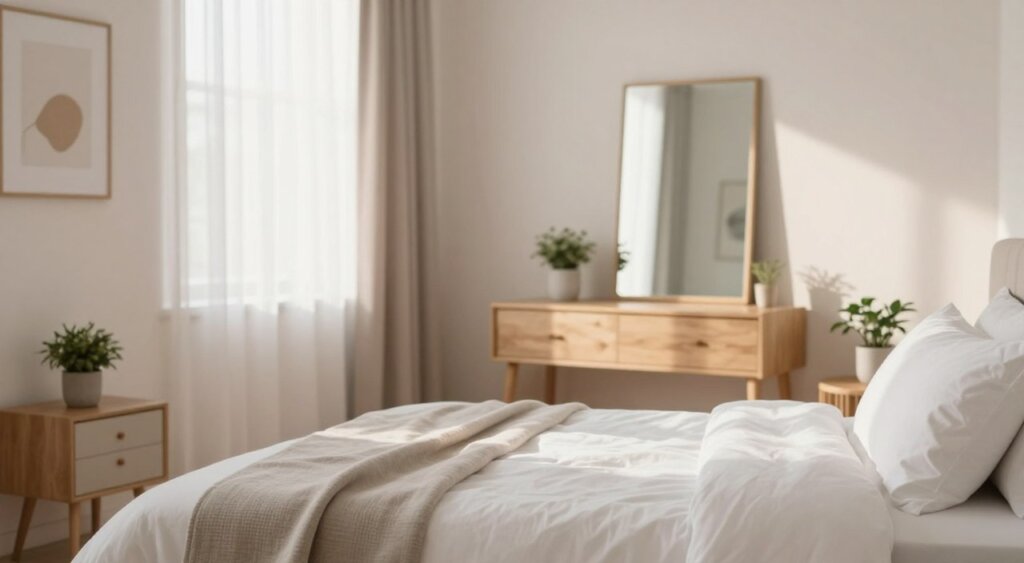
Take a short pause this month to decide what you’d like your space to support most. Choose one clear goal — better sleep, calmer mornings, or easier tidying — so each choice you make helps real life, not adds friction.
Why January feels like an edit, not a makeover
In the UK, January often brings a quiet pause after the holidays. Ami McKay called this moment “an edit, not a makeover”, which helps you opt for small, manageable changes instead of an expensive overhaul.
Quick room scan: what feels tired, unused, or unfinished
- Stand in the doorway and note odd or mismatched items.
- Spot cables, cluttered surfaces or things that never get used.
- Mark anything that makes the room feel unfinished and list one action for each.
Choose “keep, store, donate” rules to reduce decision fatigue
Use a simple rule-set to speed decisions. Set a ten-minute timer and sort items into keep, store or donate piles.
Let go of small irritations that chip away at daily mood. Make a short maintenance promise — a two-minute evening reset or a weekly surface clear — so the small changes make a lasting difference.
Clear the visual noise with a post-holiday reset
Clear away festive leftovers in one focused sweep to let the room breathe again. A tidy, intentional start removes the visual noise that makes a space feel heavy.
Remove all traces of Christmas décor and store it neatly
Take down decorations early in the day to create momentum. Pack items by room, label boxes and wrap fragile pieces so next season’s setup is easy.
Deep clean to lift the space after greenery residue and winter dust
Follow a winter deep-clean checklist: dust skirting boards and headboards, vacuum under the bed, wipe lampshades and clear any pine needles or glitter.
- Swap heavy festive scents for a fresher aroma with a candle or diffuser to mark a fresh start.
- Store items neatly so the architecture and materials of the space can show through.
| Action | Best time of day | Immediate benefit |
|---|---|---|
| Pack decorations by room | Morning | Faster next-year setup |
| Deep clean textiles and surfaces | Morning | Space feels crisp and calm |
| Swap scent to something light | Any time | Signals a clear new start |
New year bedroom refresh: declutter surfaces and simplify what’s on show
Begin by clearing the surfaces you see every day; small edits here give the biggest sense of calm. Designers such as Ali Henrie advise simplifying tops so the home can “breathe again.” Start at bedside tables, dressing surfaces and windowsills to create immediate visual relief.
Bedside tables and dressing areas: keep only essentials
Use an essentials-only template: one lamp, one book, one glass or coaster and a small dish for jewellery. Keep chargers and tech tucked away in drawers so surfaces stay serene.
Wardrobes, drawers and cabinets: purge first, then organise
Follow the purge-before-you-organise rule. Remove tired linens, mismatched hangers and worn accessories. Let go of anything that has “had its day”, then sort what remains into sensible storage.
Swap tired, mismatched or worn items that quietly drag the room down
Replacing mismatched tables or choosing one cohesive style reduces visual noise. Small upgrades, like a matching pair of bedside pieces, lift the whole scheme without major expense.
Use trays and bowls to “contain” daily clutter without adding more stuff
- Trade plastic storage boxes for woven lidded baskets where storage is on show; it reads as decor, not clutter.
- Place a single tray or decorative bowl on a table to corral hand cream, hair ties and small items.
- Choose storage that doubles as a design piece to keep surfaces purposeful and tidy.
| Spot | Quick action | Benefit |
|---|---|---|
| Bedside table | Limit to four essentials | Immediate calm |
| Wardrobe | Purge then organise | Less wasted effort |
| Open cabinets | Use woven baskets | Neat, decorative storage |
Rework layout and function so the room supports real life
Shift furniture with purpose: small moves can make your routine smoother and your space feel calmer.
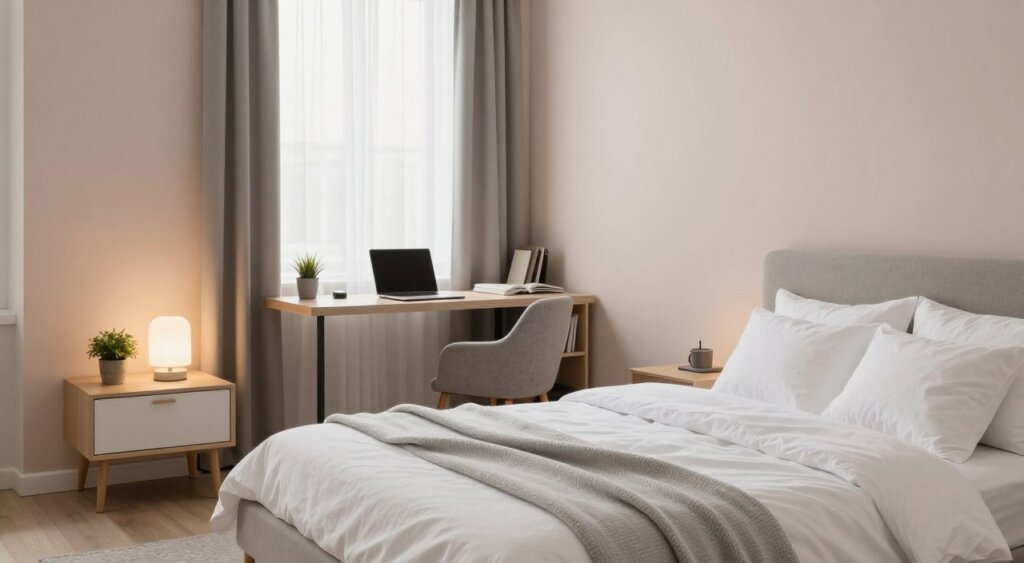
Create symmetry around the bed for a more pulled-together look
Stand back and check balance. Matching bedside tables or lamps gives a tidy design and a clear style cue.
If full matching pieces are impractical, match scale and visual weight instead. Equal heights or paired wall lights calm the eye in compact UK rooms.
Add a practical landing spot: bench, chair, or small desk
Prevent the “chair pile” with a single furniture item that suits how you live.
- A bench at the foot of the bed for clothes or a tray.
- An accent chair for reading that is sized to the room.
- A compact desk if you need a daily surface for mail or a laptop.
Plan storage where you need it most: chargers, books, and everyday items
Keep chargers and books exactly where you use them. Closed drawers cut visible clutter and make surfaces feel calmer.
Make the bed daily to keep the space feeling peaceful
A quick morning tuck is the keystone habit. It visually resets the whole room in under a minute and makes the space feel cared for all day.
| Layout fix | Simple solution | Benefit |
|---|---|---|
| Unbalanced sides | Pair a lamp or wall light | Improved design and style |
| Clothes on a chair | Place a bench or small basket | No more “chair pile” |
| Charging clutter | Use bedside drawer storage | Less visible wires and gadgets |
Refresh bedding and textiles for minimalist warmth and texture
A simple swap of textiles lifts the mood of a room without adding clutter.
Start with a designer-style bedding formula you can copy: crisp sheets with a contrast edge, a medium-weight quilt for daily use and a matelassé layer for timeless depth. This trio creates clean lines and lasting warmth while keeping the look pared back.
Introduce gentle pattern sparingly. Choose stripes, gingham or subtle checks on a cushion or throw to add interest without chaos. Keep walls and larger furniture neutral so patterns read as accents, not noise.
Warm the floor by layering a rug over existing carpet. This anchors the space and adds comfort underfoot. Pick a simple palette—warm whites, soft greys or oat tones with muted accents—to suit UK light.
- Position textiles as the quickest minimalist warmth lever: one great throw, two to three cushions max.
- Choose tactile fabrics—linen, brushed cotton, wool blends—for pleasant textures and longevity.
- Prioritise quality pieces that make a lasting difference to living and sleep.
| Textile | Why it helps | Quick tip |
|---|---|---|
| Sheets and quilt | Comfort and daily practicality | Pick a medium-weight quilt for year-round use |
| Matelassé | Timeless texture and depth | Use as the top layer for a designer look |
| Rug | Defines the area and adds warmth | Layer over carpet to anchor the bed |
Upgrade lighting for better mood, better sleep, and better style
Good lighting transforms a room at once, turning function into atmosphere with a simple switch. Small changes make a big difference to mood, routines and the way interiors feel.
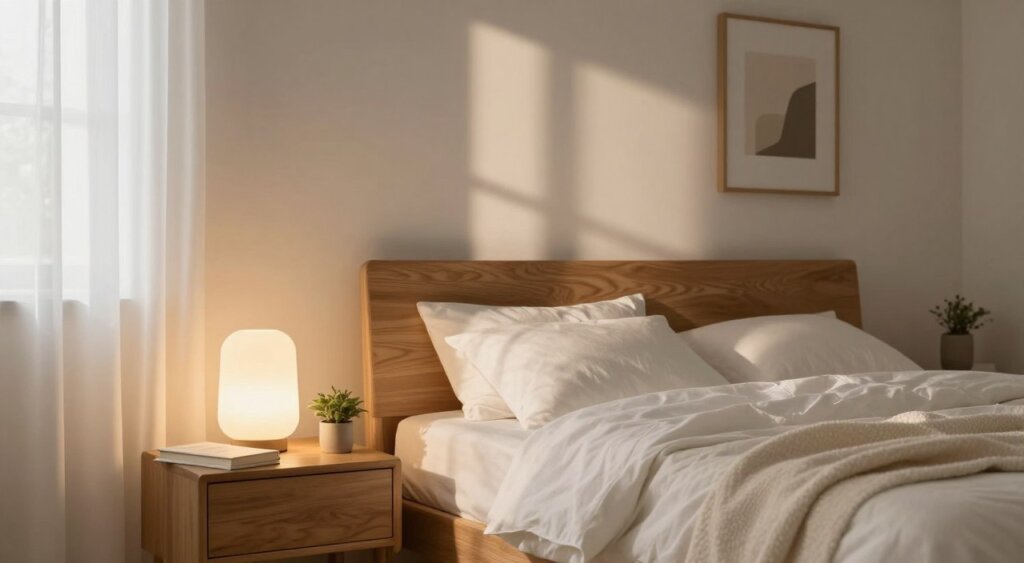
Layer your lighting: bedside, ambient, and overhead
Use three layers: overhead for general tasks, ambient for a soft glow, and bedside for reading or late-night routines. Consistent bulbs across fixtures avoid a mismatched look that undoes calm.
Reading-ready bedside lighting
Adjustable wall sconces free up surface space and give focused light for reading. A well-proportioned lamp works too—place it to reduce glare and avoid deep shadows while you read.
Consider a quick fixture swap
Changing shades or installing matching bedside lights is a fast, confidence-building update. Designers often note that replacing inconsistent fittings with adjustable sconces both improves function and lifts style.
| Checklist | Yes / No |
|---|---|
| Can you read comfortably? | |
| Can you navigate safely at night? | |
| Can you create a gentle evening mode without blasting overhead light? |
Fewer, better lights beat lots of random ones. Tidy cable solutions keep the look minimal and let the space feel like a true retreat.
Make storage look beautiful with minimalist organisation
Treat visible storage as styling: the right basket or box can calm a whole room. Swap mismatched tubs for warm, woven lidded baskets and neat storage boxes so organisation reads as decor, not clutter.
Trade plastic for woven baskets and lidded storage boxes
Choose textured baskets or neutral storage boxes for shelves and tops. Kathy Kuo recommends lidded options and bowls or trays for everyday items to lift the look without hiding access.
Use baskets inside bedside storage to keep tech and accessories tidy
Create a simple tech corral: small baskets in a drawer or cabinet for chargers, headphones and books. A wireless charger on a marble coaster keeps function neat and considered on the bedside surface.
Keep “in-sight” storage aesthetic to reduce visual clutter
Apply an in-sight rule: if it stays visible, it must be attractive and consistent. Zone by habit — one basket for night items, one for morning, and a donation bag nearby during the edit phase.
- Pick sizes to suit narrow bedside units and under-bed gaps common in UK homes.
- Use natural fibres for warmth and storage boxes with lids for tidier sightlines.
- When storage looks good, you use it — and the room stays calmer for longer.
| Spot | Solution | Benefit |
|---|---|---|
| Bedside drawer | Small woven baskets | Less surface clutter |
| Wardrobe shelf | Stackable storage boxes | Maximises space |
| Under bed | Lidded fabric boxes | Easy seasonal storage |
Conclusion
One tidy habit and one modest swap can change how your room works every day.
Keep the core idea simple: an intentional edit—clear festive decor, deep clean, simplify surfaces and favour function-led upgrades over a full makeover—creates a calmer bedroom and home. Follow the practical order: reset after the holidays, declutter what’s on show, improve layout and daily function, then add warmth with textiles and polish with better lighting.
Choose one today task (clear bedside table, swap a lamp or add a lidded basket) and one this month task (wardrobe purge, a layered bedding piece or a fixture update). Keep it steady with a two-minute evening tidy, a weekly wipe-down and a monthly keep/store/donate check.
If the space still feels flat, try a scented candle or diffuser. Minimalist does not mean characterless—select a few meaningful pieces and warm textures. Once the bedroom feels settled, many people take the same approach into other rooms, even the kitchen. The real difference comes from thoughtful changes over time that support better sleep, calmer mornings and an easier life at home.





 call now