Your bedroom can shape how you feel each day. Small changes, especially in lighting, help you unwind and set a calmer tone for the evening.
This short guide shows simple choices around brightness, colour temperature and placement. These tweaks do not need a renovation and can alter the room’s atmosphere within days.
The aim is an evening-friendly space that encourages relaxation and supports better sleep. Embrace the “glow, not glare” principle to change how the room feels at night.
Read on to learn layered solutions: fixture types, bulb Kelvin, bedside set-up and sensible screen habits. Keep routines consistent at the same time each evening for the best effect over time.
Key Takeaways
- Small changes to lights can improve how you feel each evening.
- Focus on brightness, colour temperature and placement.
- Use layered fittings and soft bulbs (Kelvin) for a calm space.
- “Glow, not glare” makes the room feel more relaxing at night.
- Stick to a consistent evening routine to see benefits over time.
Why bedroom lighting influences mood, sleep quality and mental wellbeing
Light around us quietly steers alertness, calm and the quality of our sleep. Small shifts in brightness and colour temperature can make a room feel airy and energising or cosy and restful.
How brightness and colour temperature change the way a room feels
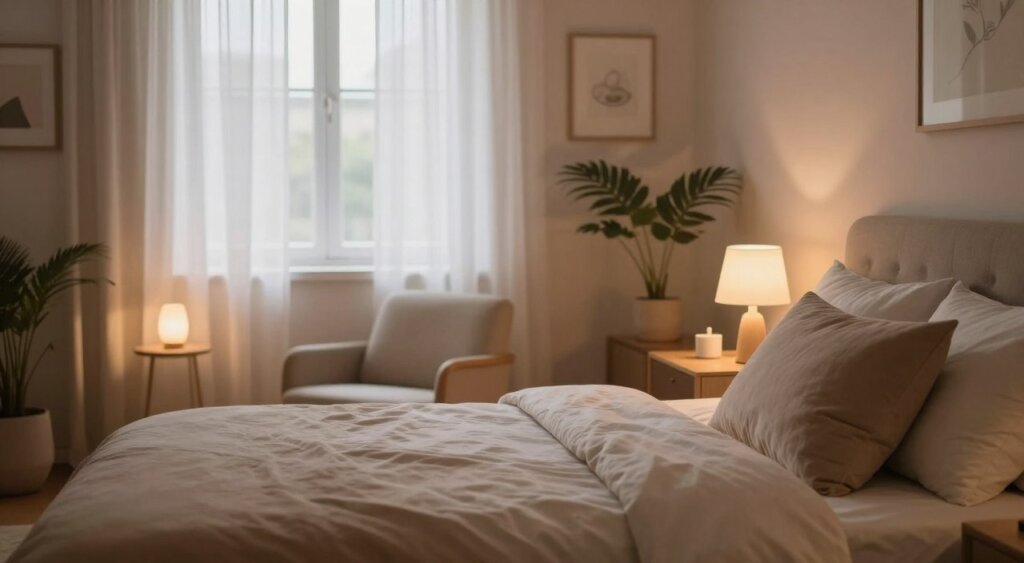
Cool, brighter light often feels more energising and helps you wake. Warmer, softer light feels calmer and supports evening routines.
Colour temperature isn’t fancy jargon — it simply means warm vs cool. A cool tone can make a space feel clinical; a warm tone makes the room feel softer and more settled.
Evening wind-down vs morning energy
Use stronger, cooler light in the morning to mimic daylight and boost alertness. As the day moves to evening, reduce brightness and shift to warmer tones to support your circadian rhythm.
Why screens and harsh light can disrupt sleep
Blue-heavy light from phones and harsh overhead lamps can suppress melatonin and keep the brain switched on. Set a wind-down time and reduce screen use one hour before bed to help your body recognise bedtime.
Once you understand the effect of brightness and colour, the next step is designing lighting that makes room feel calm on purpose.
Plan a layered lighting scheme for a calm, cosy bedroom atmosphere
Use a layered scheme to give your space warmth and flexible control. Multiple sources let you match brightness to the activity and how you want to feel.
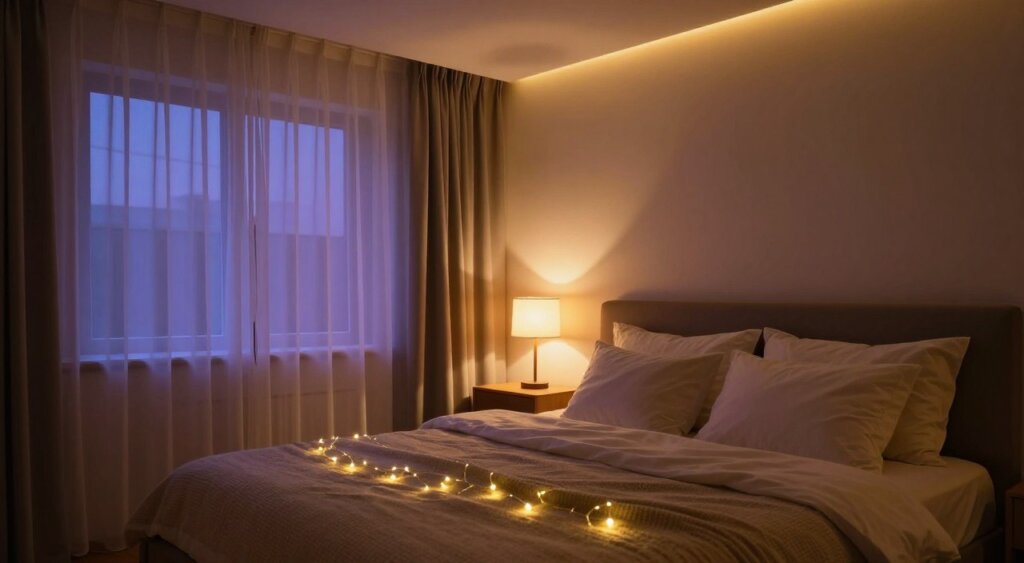
Think “glow, not glare”
Create soft, indirect pools of light that bounce off walls and fabric shades. This glow reduces harsh shadows and cuts reliance on a single overhead source.
Ambient, task and accent
Ambient light provides overall comfort. Task lights give focused illumination for reading or work. Accent lights add depth and cosy ambience.
Small-space options
Choose wall lights, pendants or a flush ceiling fitting to save bedside and floor space. These options keep walkways clear and make the room feel larger.
Make it flexible
Fit dimmers, use touch lamps and wire separate switches so you can keep one side softly lit while switching other lights off. These small changes help create a steady evening routine.
| Layer | Purpose | Fixture examples | Control |
|---|---|---|---|
| Ambient | Overall comfort and ambience | Flush ceiling, soft pendant | Dimmer |
| Task | Reading or work | Adjustable wall lights, bedside lamp | Separate switch |
| Accent | Depth and cosy pools of glow | LED strips, small uplights | Touch or low-voltage dimmer |
Bedroom lighting mood: choosing the right fixtures for relaxation
Selecting the right fittings can instantly soften the room’s atmosphere.
Start by favouring diffused, indirect sources over single harsh beams. Soft fabric or opal glass shades will turn an stark overhead into a warm, even glow. Consider dimmable flush fittings such as the Lucide Silas for low ceilings and ribbed or opal glass pendants like Dar Lighting Evander or Saturn for a gentler ceiling presence.
Ceiling lights without the starkness
Choose an encompassing shade to soften overhead output. Linen or ecru shades, and opal glass, scatter light so the space feels calm even when the central fitting is on.
Floor lamps for mellow ambient light
A single shaded floor lamp can wash the floor area with warm light and reduce need for bright central fittings. Think tripod or spool bases with a feather or fabric shade to add texture without glare.
Bedside lamps and reading lights
Bedside lamps with a small shade channel light up and down, creating gentle shadows that make the bedside zone feel cosy. Options like Dar Lighting Dolce or Lucide Sueno give a soft table-lamp presence.
For reading, use a focused clip-on or wall-mounted light so pages are lit without flooding the whole room. Look for compact LED reading fittings or a clip-on spotlight to protect a partner’s sleep.
String lights and subtle LED accents
Warm white string lights or discreet LED strips add atmosphere with little effort. Place them around a headboard or shelf to mimic a starry feel and keep the overall output low.
- Prioritise diffused light fixtures rather than a single spotlight.
- Match fixture style to your relaxation goals: soft shades and dimmers perform best.
- UK tip: check bulb compatibility and pick light output suited to the space to avoid over-lighting.
Pick the best bulb colour and brightness for soothing night-time light
A simple swap of bulb type can change how your room signals bedtime to your brain. Choose warmth and low output for a calmer evening and better sleep.
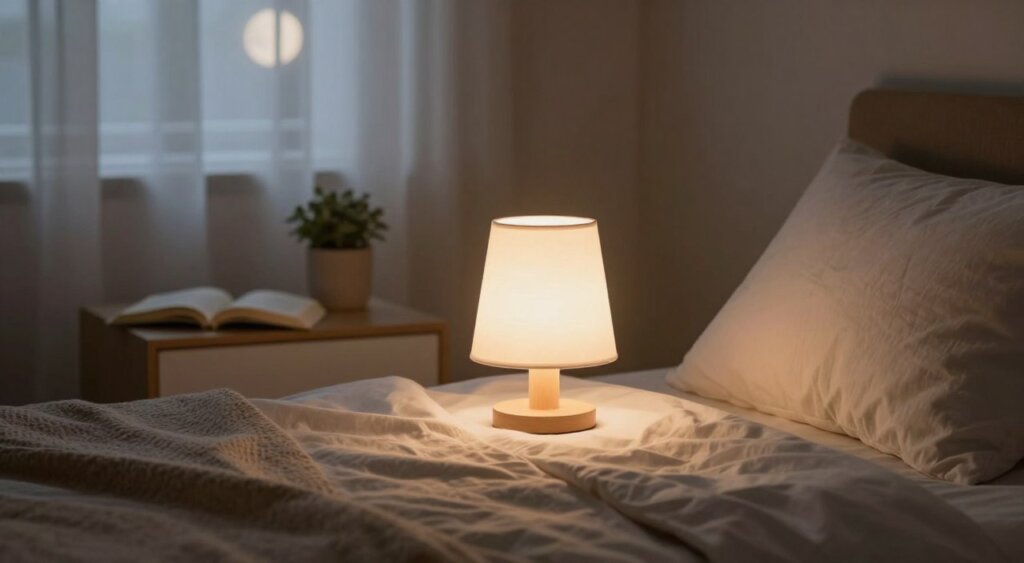
Warm white light for sleep: choosing the right Kelvin range
Kelvin is the scale that tells you if a lamp looks yellow/amber or cool and blue. Aim for warm white bulbs between 2000–4000K. A common target is about 2,700K for a cosy glow.
What to avoid at night
Steer clear of very bright white bulbs, especially 5,000K and above. Blue-heavy light and screens suppress melatonin and can leave you feeling wired at night.
Using dimmable LEDs and colour-changing options responsibly
Dimmable LED bulbs work well if you actually lower them as evening progresses. Colour-changing options are fun, but pick warm presets late at night and keep novelty modes very dim.
- Quick test: if the right light feels sharp or clinical, reduce brightness or switch to warmer bulbs.
- Prefer diffused fittings and avoid exposed bulbs at bedtime.
With bulbs set correctly, the next focus is the bedside area — where comfort and convenience matter most at wind-down time.
Set up your bedside lighting for comfort, convenience and a better wind-down
Your bedside zone is the last place you see before sleep, so tune it to soothe rather than stun.
Bedside lamp height, scale and placement for easy on/off and zero glare
Keep the bedside table roughly level with the top of the bed and no more than 4–5 inches from the mattress. This distance lets you reach switches without stretching or fully waking up.
A lamp about 25–29 inches tall usually sits well on a standard table. Choose a lamp with a shaded head so the bulb stays hidden and does not act like a spotlight in your face.
Shades and materials that warm the room: linen, parchment and opal glass
Pick shades made of linen, parchment or opal glass. These materials soften light and help create a calm atmosphere. Avoid exposed bulbs; diffused light prevents harsh glare and makes the space feel cozier.
Place lights lower down: night lights and gentle floor-level glow
Use plug-in night lights or a small floor lamp near the floor for mellow wayfinding at night. These low-level lights make trips to the loo safe without blasting bright overhead light.
- Reduce brightness at wind-down time.
- Use a shaded bedside lamp at the right height (25–29 inches).
- Keep the table close (4–5 inches) for easy switching.
- Choose linen, parchment or opal glass shades for a soft glow.
- Include low floor or night lights to help create gentle ambience.
| Goal | Fixture | Control |
|---|---|---|
| Reading | Adjustable bedside lamp | High/low switch or dual bulb |
| General ambience | Table lamps with linen shade | Dimmer |
| Night trips | Floor-level plug-in night light | Low output, separate plug |
Conclusion
<!– Suggested meta: –>
A thoughtful light plan makes winding down easier without expensive upgrades.
In short, how you set up your bedroom affects how relaxed you feel and how well you sleep. Start by checking brightness and colour temperature, then build a layered scheme, pick calming fittings and fine‑tune bulbs and bedside setup.
Practical wins are simple: warm, dim light in the evening; diffused shades; separate switching or a dimmer; and low‑level lights for night trips. Keep screens down in the last hour before bed to help your body prepare for sleep.
Consistency beats perfection. Audit your current set‑up and try one change this week — swap to a warm bulb, add a dimmer or place a shaded bedside lamp. These small steps offer a steady foundation for better rest and daily wellbeing.





 call now