Bonfire season can be stressful for many households across the UK. Loud bangs and bright flashes often startle animals and can affect how well everyone settles at night.
This short guide explains practical steps to make your home calmer when fireworks appear. It covers dogs, cats and small animals, since each species reacts differently to sound, light and vibration.
Prepare in advance, create a safe space, reduce noise and flashes, keep routines steady and learn what to do when displays begin. Small, simple changes at home can lower anxiety and help you and your pet get better rest.
If fear is persistent or severe, it is a welfare issue and professional support from a vet or a behaviourist can help long term. Remember: never punish fear responses; reassurance and preparation work best.
Key Takeaways
- Plan ahead for Bonfire Night and the wider display season to protect your home and animals.
- Advice covers dogs, cats and small mammals because reactions vary by species.
- Practical actions: prepare, make a safe space, cut noise and shield lights, keep routines.
- Small adjustments can reduce anxiety and improve overnight settling for people and animals.
- Seek vet or behaviourist help for persistent or severe fear; it is a genuine welfare concern.
Why Bonfire Night disrupts pets’ sleep in the UK
Even distant bangs can trigger a strong reaction in animals with keen hearing. Sudden, unpredictable bursts of sound and bright flashes combine to feel threatening. That state of alert makes it hard for dogs, cats and small mammals to settle.
Loud bangs, flashes and heightened senses
Cats hear about three times better than humans; dogs pick up higher frequencies and sounds from far away. Vibrations, altered smells and unexpected lights all add up. These sensory overloads keep many animals in a tense, wakeful state.
Fear responses, stress and escape risks
Fear triggers fight-or-flight. You may see pacing, trembling, hiding, vocalising, toileting accidents or reduced appetite. Some animals try to bolt and can injure themselves or get lost, so home security matters at Bonfire Night and New Year’s.
How common is this anxiety in the UK?
Large surveys back this up: a Ceva Animal Health poll found anxiety affects over 80% of animals around Bonfire Night. The PDSA PAW Report says 41% of dog owners note their dog is afraid of firework sounds — about 4.1 million dogs. Spotting early signs lets owners act sooner with calming routines and a safer setup.
Get ready in advance for fireworks season
Plan ahead so evenings and nights during display season are calmer for everyone at home. Preparing early reduces last‑minute stress and helps owners stick to routines that reassure a dog, cat or small pet.
Check local display dates and likely start times
Check council pages and community groups for event dates and likely times, including weekends around 5 November. Note start and finish times so you can plan quieter walks and avoid surprise loud bursts.
Set up an evening and overnight plan
Walk dogs before dark and give an early last toilet break. Close curtains and windows before dusk and have background sound ready to mask noises.
Create a simple wind‑down routine: calm play, low lights and a settled den area. Prepare batteries for white‑noise devices and extra toys in advance.
Update ID tags and microchip details
Make sure collars, ID tags and microchip records are up to date. UK law requires dogs to be microchipped and cats over 20 weeks should be too, which speeds reunification if an animal bolts.
- Check local listings to predict times fireworks may begin and end.
- Plan door discipline and visitor briefings on bonfire night to prevent accidental escapes.
- Make a season checklist: spare batteries, enrichment toys and a cosy den kit.
| Action | Why it helps | When to do it |
|---|---|---|
| Research local displays | Anticipate loud periods and plan walks | At least two weeks in advance |
| Prepare evening routine | Creates predictability and calm | Start one week before busy dates |
| Update ID and microchip | Speeds reunification if an animal escapes | As soon as possible |
Create a safe space that encourages calm and sleep
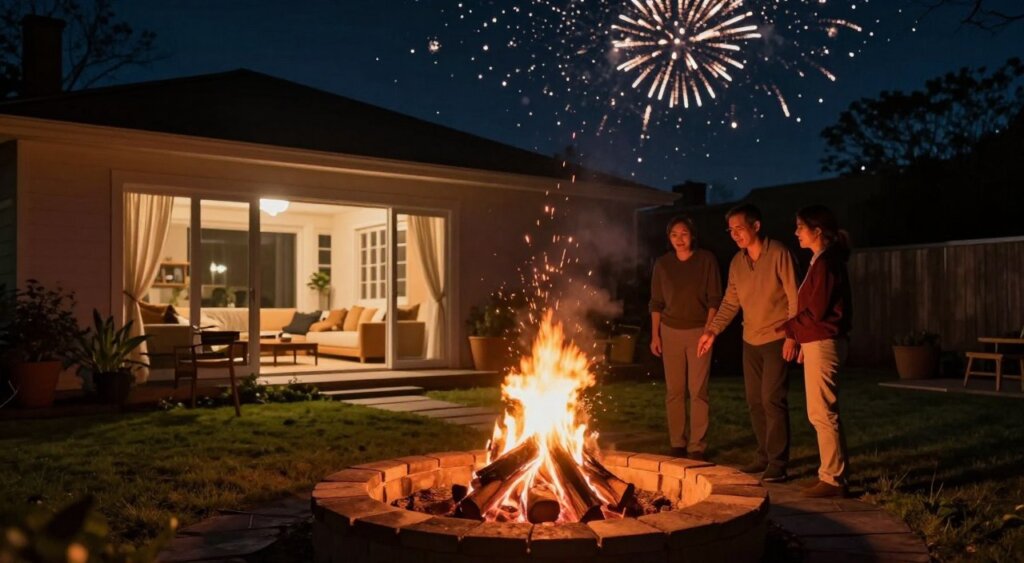
Giving your animal a predictable refuge helps reduce fear and supports calmer behaviour at night. Start early so the den becomes familiar well before any noisy evenings.
Choosing the right spot
Pick a natural hideout your dog or cat already favours — under a bed, behind a sofa, a crate or a cupboard. For cats, high perches can feel safest.
Make it cosy
Line the space with soft bedding, a worn T‑shirt with your scent and a couple of favourite toys. Keep water and a small amount of food nearby so the area supports rest.
Access and positive training
Let animals enter and leave freely; never force them in. Run short, calm practice sessions in the weeks beforehand. Use gentle praise and a few treats to build a positive link with the safe space.
Practical safety notes
- Remove trip hazards like loose wires and secure wobbling shelves.
- Ensure good ventilation if you drape blankets over an area.
- Place the den away from front doors and busy hallways to lower escape risk.
Remember: some animals will not use the den and may choose a different spot. The aim is to offer options that help reduce anxiety, not to control every reaction.
Control noise, flashes and vibration inside your home
Small indoor changes make a big difference. Start a simple late‑afternoon routine so lights and movement are less likely to startle animals and household members.
Close curtains and windows to reduce loud noises and block lights
Close curtains and shut windows before dusk to cut down outside noise and reduce flashes. Leaving lamps on helps outside lights seem less sudden.
Blackout the safe space to minimise flashes and outside movement
Make the den darker with a blanket draped over a crate or a cosy corner. Keep air flowing and let the pet leave freely so the area stays safe and inviting.
Use rugs, blankets and closed internal doors to muffle sound
Soft furnishings and closed doors lower vibration and noise travel, which is especially helpful in older UK homes with draughts.
- Late‑afternoon house set‑up: close curtains, latch windows, check garden gates.
- Leave low lamps on to reduce visible outside flashes.
- Cover dens gently with breathable blankets; keep exit routes clear.
| Action | Benefit | When |
|---|---|---|
| Close curtains & windows | Reduce noise and visible lights | 30–60 minutes before dark |
| Blackout den gently | Minimise startle from flashes | Before displays begin |
| Use rugs and closed doors | Muffle vibration and loud noises | All evening |
These steps support calmer behaviour and improve the chance of better overnight rest for people and animals at home.
Use sound masking and calming routines for better overnight settling
A steady background of familiar sounds helps make sudden bangs less alarming for animals. Start this routine early so the house feels normal when displays begin.
Play music, TV or white noise to cover louder sounds
Steady audio makes sharp bursts less distinct. TV dialogue, white noise apps or calm playlists can help a pet return to rest after an interruption.
Try calming classical options and keep volume comfortable
Classical music often soothes; Classic FM’s “Pet Classics” is a useful choice to test. Keep volume high enough to mask outside noise but low enough not to add stress to sensitive ears.
Stick to normal routines so your animal feels secure
Keep mealtimes, the last toilet break and bedtime cues unchanged. Predictability reduces anxiety and helps overnight settling.
- Test audio choices on quieter evenings for a few weeks before the night.
- Use varied options: radio, playlists, TV or white noise machines.
- Balance volume: mask sudden noise without overwhelming hearing.
Fireworks pets sleep on the night: what to do when bangs start
A measured, routine response when noise starts will cut anxiety and support rest at home. Keep your tone low and move as you normally would so your animal reads calm behaviour, not alarm.
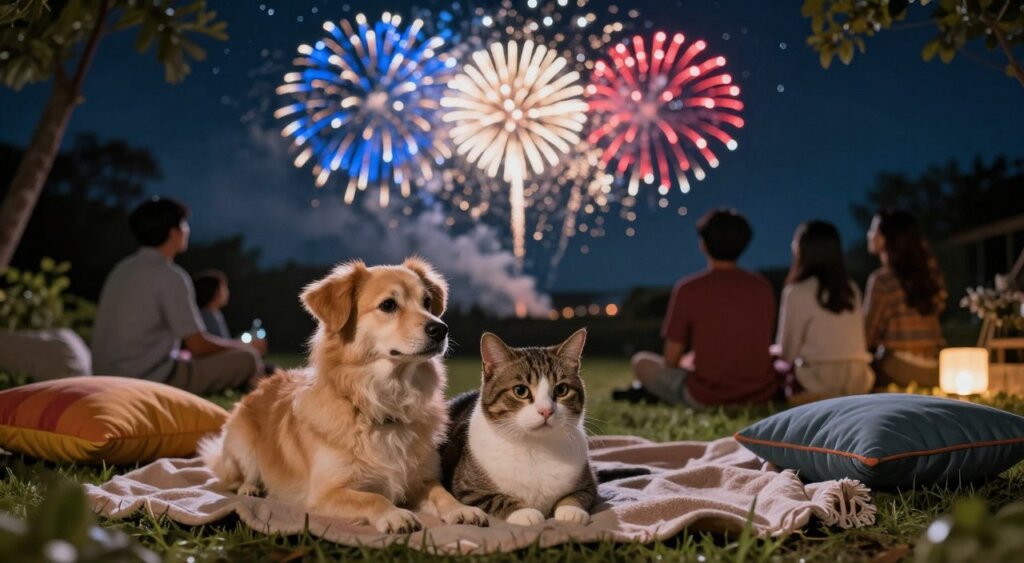
Stay calm and act normally
Use a neutral voice and carry on with ordinary tasks. Avoid dramatic reactions that could signal danger.
Let them choose coping behaviours
Allow hiding, pacing or clinging without forcing interaction. Let your pet decide where to be and when to come to you.
Offer gentle reassurance if invited
If your animal approaches, give quiet strokes and brief comfort. Don’t over‑fuss; too much attention can strengthen fearful behaviour.
Practical safety steps
- Make sure doors and windows are shut, cat flaps blocked and garden gates secured.
- Tell visitors to keep calm and follow house rules to reduce escape risk.
- Watch for worrying signs: heavy panting, vomiting or attempts to self‑harm, and be ready to move them to a quieter interior room.
These simple, kind ways help reduce fear and stress during a noisy night and give the best chance of calmer behaviour and improved sleep once displays pause.
Dog-specific tips for fireworks night and sleep
Simple, early actions on busy nights help most dogs settle and reduce risky escapes. Almost two thirds of owners in the Savanta 2025 poll said loud displays negatively affected their dog, so plan with care.
Walk before dark and keep them on a lead
Take a longer, earlier walk while it is light. Let your dog sniff and explore; that calm activity helps them rest later.
Keep dogs on a secure lead even in familiar places. Sudden noise can trigger bolting and recall may fail when fear kicks in.
Distraction that helps: chew toys and food puzzles
Offer stuffed Kongs, lick mats or puzzle feeders in the safe area. Licking and chewing release calming hormones and focus attention away from outside noise.
Spot subtle signs of stress
Watch for panting, yawning, lip-licking or pacing. These signs let you act early — move the dog to a quieter room and turn on background audio.
- Don’t leave a dog outside, tied up, in a car, or take them to displays.
- Prioritise comfort over training on the night; safety and rest matter most.
Cat-specific tips to reduce anxiety and help cats rest
A calm, predictable home helps most cats cope better during noisy evenings. Small changes at the right time make a big difference to a cat’s comfort and safety.
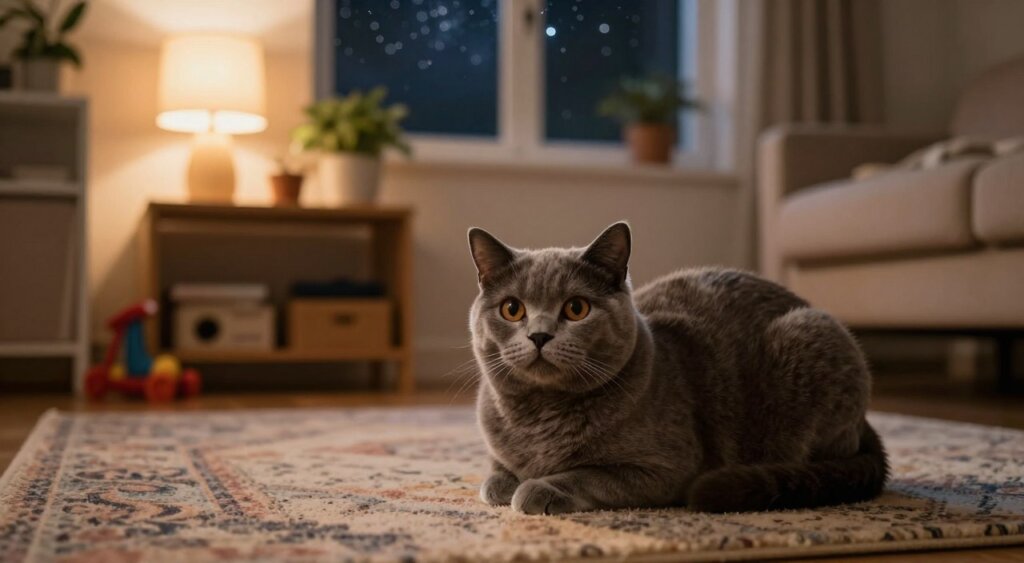
Keep cats indoors after dark and block the cat flap
Keep your cat inside from dusk until the next morning to reduce exposure to loud bangs and bright flashes. Block the cat flap and check windows are secure so they cannot bolt if startled.
Make sure litter trays, food and water are easy to reach so basic needs are met without stress.
Provide multiple hiding places and safe high spots
Offer several options around the house: under beds, in stable wardrobes with access, cardboard boxes and high perches. Cats choose what feels best, so spread options across rooms.
Include familiar bedding and a worn item with your scent to help reduce anxiety and make each spot inviting.
Watch for stress signs and give gentle, hands-off care
Look for hiding for long periods, reduced appetite, toileting outside the tray, over‑grooming or sudden clingy behaviour. These signs can show rising stress and need quick attention.
If a cat has a history of urinary problems, monitor closely and contact your vet if you see straining, blood or heavy breathing. Let the cat come to you; don’t drag them from hiding—calm, steady care helps most.
| Action | Why it helps | When |
|---|---|---|
| Keep indoors and block flap | Reduces exposure to loud outside noise and bright flashes | From dusk until morning |
| Provide multiple hides & perches | Gives choice and control, lowering anxiety | Set up days before noisy events |
| Monitor stress signs | Early detection prevents escalation and health risks | During and after noisy periods |
Small pets and indoor safety during fireworks
Indoor shelter and careful hutch cover-up make a real difference to small animal welfare on noisy nights.
Small animals are highly sensitive to sudden sounds and vibration. Reports show some rabbits and guinea pigs suffer extreme stress during displays, so planning is essential.
Bring rabbits and guinea pigs indoors where possible
Move hutches or carriers into a quiet room, shed or garage away from windows and household bustle. Keep them off cold floors and out of draughts.
Extra bedding and cover set-ups
If animals must stay outside, push the hutch against a solid wall and add thick bedding for burrowing. Drape heavyweight blankets over the hutch but leave a clear ventilation gap to maintain airflow.
Keep bonded companions together and maintain supplies
Keep bonded animals together; separation often increases anxiety. Top up hay, pellets and fresh water before evenings so you avoid opening enclosures during loud periods.
- Position hutches away from exposed sides and secure lids.
- Provide extra hiding spaces and safe enrichment toys.
- Monitor for stress signs — freezing, frantic movement or reduced eating — and call your vet if appetite fails after the night.
| Action | Benefit | When |
|---|---|---|
| Bring indoors to quiet room | Reduces exposure to loud sounds and vibration | Before dusk |
| Add bedding & cover with gap | Improves insulation and reduces noise while keeping ventilation | Set up earlier in the day |
| Keep bonded companions together | Lowers stress and prevents separation anxiety | During and after noisy events |
| Top up hay, pellets & water | Reduces need to open hutch during loud periods | Before displays begin |
Long-term solutions and when to speak to your vet
Addressing noise phobias over months changes how a dog or cat reacts year after year. Long-term planning is the best way to reduce fear because quick fixes on the night rarely alter underlying responses.
Desensitisation and counterconditioning
Start by playing low-volume firework sounds and pair them with high-value treats or a favourite game. Keep sessions short and only increase volume over weeks if your pet remains relaxed.
Watch for stress signs and slow the process if needed. Consistency over time builds a new, positive link to the noise.
Supportive aids and non-drug options
Pheromone diffusers (Adaptil, Feliway), collars or sprays can help when used weeks before the busy season. Compression vests and approved supplements may reduce anxiety for some animals, but results vary.
Medication and professional support
Speak to your vet well before any display dates if your animal is panicking, self-injuring, or not improving. A vet can advise on safe medication trials and refer you to an accredited clinical animal behaviourist for specialist plans.
Never punish fear
Do not scold shaking, hiding or barking. Punishment increases anxiety and undermines training. Kind, planned steps give the best chance of lasting improvement.
Conclusion
A little preparation each year cuts worry for owners and their animals when nights get loud. Plan ahead, reduce flashes and noises at home, keep routines steady and offer a safe space your pet can choose.
For species specifics: walk your dog before dark and keep them secure, keep your cat indoors with hiding options, and bring small animals inside or shield their housing with ventilation. These steps lower risk and reduce stress.
Make a simple Bonfire Night plan each season, update ID and microchip details, and set up early so you are not scrambling at the time. If fear is severe or persistent, seek veterinary or behaviourist advice.
Use these practical tips each year to help pets settle more comfortably and keep your household safer when displays begin.





 call now