This short guide gives a practical, modern UK-friendly take on using feng shui to improve rest and reduce mess. It focuses on small, sensible changes you can make without turning your room into a staged showroom.
Expect simple fixes: clear pathways, decluttering rules and calming design choices that help a smooth wind-down. The aim is clearer surfaces, softer light and a supportive headboard that helps you feel grounded at night.
We cover realistic situations common in the UK — small rooms, rented flats, awkward doors and limited storage. When the bed, sightlines and routes feel right, the space feels safer and quieter, so you relax faster.
Later sections dig into the biggest levers: the commanding position, mirrors, under-bed storage, tech boundaries, lighting, colours and natural elements. Comfort comes first: these principles reduce visual noise and add stability, not more rules.
Key Takeaways
- Small, practical shifts can make your room feel calmer and support restful sleep.
- Prioritise a commanding position for the bed and clear sightlines.
- Use under-bed storage and tidy surfaces to lower visual noise.
- Set tech boundaries and choose softer, layered lighting for evenings.
- Introduce natural textures and a sturdy headboard to boost comfort.
What Feng Shui means for your bedroom energy and sleep
How energy flows in your sleeping space affects both rest and daytime mood.
Chi and “wind-water” made simple
Chi is the simple feeling a room gives you when you walk in. It is set by layout, light, air and clutter, and by what your eyes land on first.
“Wind-water” points to airflow and freshness. Gentle movement of air makes the space feel alive without being busy.
Why this space matters more than you think
Your sleeping area is where much of your life is restored. Small tweaks here create outsized benefits for relaxation and waking energy.
Clear walkways, uncluttered corners and balanced furniture reduce friction and restlessness. That lets you unwind faster and sleep deeper.
- Think of chi as the room’s mood — keep it calm and steady.
- Use airflow, soft light and tidy surfaces to support positive energy.
- Aim for yin: restful, quiet choices that lower stimulation.
- In UK homes, symmetry and smart storage make even a small space feel supportive.
| Tip | Effect on energy | Quick action |
|---|---|---|
| Clear a path around the bed | Improves energy flow | Move one item; keep floors visible |
| Fresh air and soft window dressing | Brings gentle wind-water movement | Open window briefly each day |
| Reduce visual clutter | Creates calm and positive energy | Store surfaces in boxes or drawers |
| Choose muted colours and soft light | Supports yin and better relaxation | Swap bright bulbs for warm, low lamps |
Why a Feng Shui bedroom supports restful sleep in the present day
When day-to-day bustle follows you indoors, small shifts can turn a restless room into somewhere calming. Modern routines, constant screens and unfinished tasks can make your sleeping space feel like a to-do list rather than a retreat.
Reducing anxiety by removing visual and mental “noise”
Visual noise — laundry on a chair, paperwork on a chest, open shelving with lots of things — keeps the brain in problem mode. That raises anxiety at bedtime and makes it harder to relax.
Applying simple feng shui means keeping sightlines tidy and storing active items out of view. Fewer visible objects lightens mental load and helps your nervous system shift toward rest and calm energy.
Fresh air and ventilation as part of a calm sleep environment
Airflow matters. A study in Indoor Air found that sleeping in well-ventilated rooms improved sleep quality, cut night-time awakenings and lowered CO₂ levels overnight.
In the UK, a short airing routine — ten minutes once a day when safe — refreshes the room without making it chilly. Cracking a window or improving circulation is an easy, practical upgrade that supports deeper, less interrupted sleep.
| Problem | Effect on energy | Quick fix |
|---|---|---|
| Visible clutter (laundry, paperwork) | Increases mental noise and anxiety | Store items out of sight; use baskets |
| Poor ventilation | Drier air, higher CO₂ and fragmented sleep | Air for 10 minutes daily; use trickle vents |
| Work items in the room | Active energy delays rest | Relocate desk items or pack them away each night |
Next, we move into practical layout fundamentals to help you place furniture for better energy and comfort. The following sections start with simple rules before looking at precise bed positioning.
Feng shui bedroom layout fundamentals to start with
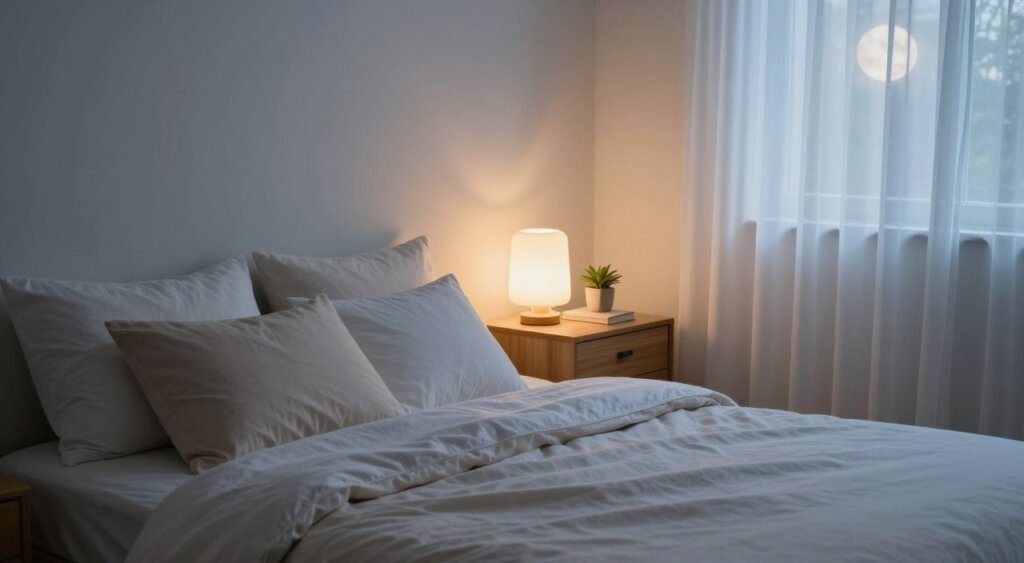
Start by treating the room as a single, calm zone where each item has a job to do.
Less-is-more: creating a room that feels quiet and grounded
Prioritise the bed and clear pathways before adding extra décor. Keep surfaces tidy and choose a muted colour scheme to reduce visual noise.
Edit with purpose: remove overflow storage, unused chairs and bulky pieces that block movement. Aim for fewer items that support rest, not more that demand attention.
Symmetry and balance to encourage positive energy
Balanced bedside furniture gives a sense of fairness and calm. You do not need perfect matches; similar height, scale and lighting will do the job.
Keep the bed accessible from both sides and avoid placing it directly in line with the door. These simple moves protect flow and make the space easier to use.
- Starter checklist: accessible bed sides, clear floors, uncluttered surfaces.
- Use moveable pieces — lamps, small tables and cushions — to create balance in rented homes.
- Remember: bed placement sets the tone for the whole room’s energy and comfort.
Place the bed in the commanding position for stability
Positioning your bed well is one simple change that helps a room feel safer and calmer. The commanding position means you can see the door while not lying directly in line with it, often slightly diagonally across the room.
Why this matters: when you can see the door, subconscious vigilance drops and sleep becomes easier. A clear sightline reduces restless energy and promotes stability.
Key practical rules
- Define the position: lie in the bed and check you can see the door, but the bed is not directly in line with it.
- Avoid the “coffin” or “death” position where feet point straight at the door — it can raise restlessness.
- Keep access at both sides of the bed for easy movement and to stop trapped energy.
- Place the headboard against a solid wall for psychological and physical support.
| Problem | Quick fix | Effect |
|---|---|---|
| Bed directly in line with door | Slide it slightly to create an offset sightline | Less vigilance; calmer energy |
| Only one side accessible | Reposition or use narrow bedside table on the other side | Better flow and shared use |
| No solid wall behind head | Add a sturdy headboard or wall-mounted support | Increased stability and comfort |
Small adjustments often work well in UK rooms. Aim for balance, not perfection: even partial changes to bed placement can noticeably improve how calm the space feels.
Choose the best bed direction without overcomplicating it
Direction can guide where your bed faces, but practical comfort matters more. Use tradition as a gentle cue, not a strict rule.
Sleeping with your head facing south: what it means
Many guides suggest a head-facing-south rule. Some people feel calmer when they try it. If it is easy to test, try it for a few nights and notice any change.
If south isn’t possible: prioritising comfort and a calm line of sight
Follow a simple order when you change a position: first safety and comfort, then the commanding position, then direction where practical.
Quick check: use a phone compass briefly to confirm direction. Then sleep in the new setup for several nights before deciding.
| Priority | Action | Why it helps |
|---|---|---|
| Safety & comfort | Choose a bed spot with easy access and a solid headboard | Supports rest and reduces night-time fuss |
| Commanding position | Arrange so you can see the door without being in line with it | Reduces low-level vigilance and eases sleep |
| Direction | Test head-facing-south if it’s not disruptive | Traditional cue that some people find soothing |
| Tweaks for awkward rooms | Avoid facing clutter, mirrors or bright screens; balance bedside items | Keeps the view calm and steady regardless of compass points |
Create balance with bedside furniture and clear pathways
Simple changes to what sits either side of the bed can shift a room’s mood overnight. Aim for visible balance and easy movement so the space feels calm and fair to anyone using it.
Matching bedside tables for harmony and equality
Placing similar furniture on both sides creates visual symmetry and a sense of equality in shared rooms. Matching tables do not have to be identical — similar height and scale work well.
For small rooms choose slimline tables, wall-mounted shelves or one table plus a small stool to mimic balance without crowding. Keep surfaces minimal: a lamp, a book and a glass of water are usually enough.
Keeping walkways open to support energy flow around the bed
Clear pathways mean you can walk round the bed without weaving past piles or protruding corners. Open routes help energy flow and make daily tasks — like making the bed — easier.
Quick measuring tip: ensure enough clearance to open drawers and pass comfortably. Aim for at least 45–60 cm where possible so movement is smooth.
- Straighten floors: remove boxes and loose items near the bed.
- Align tables: check both sides look balanced in height and scale.
- Minimise clutter: keep bedside tops to essentials only.
| Issue | Quick fix | Why it helps |
|---|---|---|
| Only one side usable | Swap in a slim table or stool opposite | Creates balance and easier access |
| Blocked pathway | Move storage and clear 45–60 cm clearance | Improves energy flow and daily use |
| Cluttered bedside | Reduce to lamp, book and water | Less visual noise before sleep |
Five-minute micro-checklist: straighten pathways, align tables, and remove floor obstacles near the bed. These small acts improve flow and make the whole bedroom feel calmer.
Mirrors in a Feng Shui bedroom: where they help and where they harm
Mirrors can reflect light and make a small room feel brighter. But their position matters when you want calm and deep sleep.
Why mirrors facing the bed can lead to fitful sleep
A simple rule: avoid mirrors that show you while lying in bed. Reflections draw the eye and raise alertness. That can lead to lighter, more disturbed sleep and add a sense of negative energy near your resting spot.
Better placement ideas
When moving a mirror is tricky, aim to reflect daylight instead. Position a mirror opposite a window to boost natural light without reflecting the bed or the door.
In UK rooms with mirrored wardrobes or second‑hand furniture, tilt mirrors slightly or mount them on a wall that faces a view rather than the sleeping area.
How to cover or reposition mirrors at night
If you cannot change the placement, use a practical night fix. Drape a lightweight throw, hang a narrow curtain or use a folding screen after dark.
Choose rounded frames and soft shapes rather than sharp angles to reduce visual edge near the bed. The aim is a visually quiet space when you lie down.
| Issue | Impact | Placement fix | Night-time solution |
|---|---|---|---|
| Mirror shows the bed | Sleep becomes lighter | Move to reflect a window or wall view | Drape fabric or use a screen |
| Mirror reflects the door | Makes the room feel busy | Angle away from doorway | Hang a curtain or close doors at night |
| Built-in mirrored wardrobe | Hard to avoid reflections | Tilt mirror or add a framed panel | Use a cover or removable film after dark |
Declutter your room to remove stagnant energy
A tidy room helps the mind settle at night and makes it easier to switch off. Clutter is more than floor mess; it is visible piles, open bags, paperwork and unfinished corners. These things keep attention active and stop the space feeling restful.

What clutter often includes
Think laundry on a chair, stacks of bills, an inbox tray left open and cables on surfaces. Even a half-open wardrobe door or a drawer left ajar sends a signal that the room is unfinished.
Why this matters for sleep and relaxation
Visual disorder raises stress and keeps the brain alert. That low-level tension interferes with sleep and with settling into evening relaxation.
Quick reset routine and practical supports
- Nightly 3–5 minute reset: put clothes in a hamper, clear the bedside table, straighten the path to the bed.
- Keep work paperwork out of sight — use a single inbox tray outside the room.
- Use lidded baskets and a covered laundry hamper; shut drawers and the wardrobe door each night.
| Action | Why it helps | Simple tool |
|---|---|---|
| Laundry off the floor | Reduces visual distraction | Lidded hamper |
| Surfaces cleared | Calmer sightlines | Small tray or box |
| Close doors and drawers | Stops the room feeling unfinished | Habit: five-second check before bed |
Small, consistent habits beat occasional big cleans. A few steady actions each evening keep energy calmer and make the room a true place for rest. Try a simple feng shui bedroom reset for a week and notice the difference.
Keep the space under the bed clear for smoother energy circulation
Leaving the area under your bed free from clutter helps the room feel lighter and easier to clean. In practical terms, that open space supports better air movement and a calmer mood at night.
Why under-bed storage can interfere with sleep quality
The space beneath the bed is part of the room’s energy circulation. Stuffing it with boxes or loose things can create stagnant energy and a heavier feeling around the bed.
People often report they sleep more soundly when the area is tidy, dust-free and simple to clean. Reducing visible clutter helps the mind settle before bedtime.
If you must store items: choosing soft storage and reviewing regularly
Avoid storing paperwork, electronics, sharp items or anything linked to stress directly under the bed. These can keep the mind active and disturb restful energy flow.
- Use soft-sided fabric boxes or zipped bags rather than hard crates.
- Group items neatly so nothing spills out or overflows into the space.
- Consider alternatives: ottoman storage, top-of-wardrobe boxes or a lidded trunk away from the bed.
- Review contents each season to stop under-bed storage becoming forgotten clutter.
| Action | Why it helps | Quick tip |
|---|---|---|
| Clear under-bed space | Improves air movement and calm | Keep floor visible and dust-free |
| Soft storage only | Less visual heaviness; easier to tidy | Choose fabric boxes with lids |
| Seasonal review | Prevents forgotten, stress-linked items | Set a calendar reminder |
Separate work and exercise from sleep to protect yin energy
A bedroom that doubles as an office or gym sends mixed signals to your brain. Keep the sleeping area simple so it cues calm and rest.
Why desks, laptops and paperwork increase active energy
Think of yin as rest and yang as activity. A desk, laptop or open papers creates visual reminders of tasks and deadlines. That keeps your mind tuned to problem‑solving instead of winding down.
Where to relocate work items in a small UK home
If space is tight, use a fold‑away desk in a living area, a cupboard workstation or a lidded box you can shut and move outside the room. Even moving a laptop to a shelf each evening helps.
Keeping gym kit out of sight to prevent overstimulation
Exercise equipment is active by nature. Store gym kit in a closed wardrobe, ottoman in another room, or a lidded basket so it is out of view. If you must keep items in the room, use a screen or curtain to zone them away from the sleep area.
- Nightly habit: clear the desk, shut the laptop and file loose papers so the room looks finished.
- Simple zoning: a shelf, curtain or small divider can separate a work corner from sleep space.
- Remember: you do not need a perfect home office—reduce cues that trigger active energy for better rest.
| Issue | Quick fix | Effect |
|---|---|---|
| Desk in the sleeping area | Fold away or move to another room | Less mental activation at night |
| Visible gym kit | Store in a lidded basket or wardrobe | Reduced visual stimulation |
| Loose paperwork | Use a folder and remove from the room each evening | Cleaner sightlines; calmer energy |
Limit electronics and screens to reduce negative energy and blue light
Electronics can quietly shift the tone of a room from restful to restless. Consultants often call tech “active” because it raises alertness and adds negative energy to a sleep space.
Blue light delays sleep timing and fragments rest. Scrolling keeps the mind engaged long after you mean to stop. These effects sit alongside the traditional view that a calm space supports restful sleep.
Why TVs and phones disrupt calm
Devices emit stimulating cues and make the bed a place for doing, not resting. A TV opposite the bed turns the sleeping area into a focal point for activity.
Night-time tech boundaries that stick
- Try a 30–60 minute screen curfew before lights-out.
- Charge phones outside the room or across the room from the bed.
- Use a basic alarm clock if you rely on a phone for waking.
- If a TV must stay, cover it at night or angle it away from the bed.
- Replace screen time with one book, gentle stretching or a short breathing routine under soft light.
| Issue | Why it matters | Practical fix |
|---|---|---|
| Phone by the bed | Encourages late-night scrolling; blue light | Charge outside room or use alarm clock |
| TV facing bed | Makes bed the activity focus | Cover at night or reposition |
| Night-time screen use | Delays sleep and fragments rest | Screen curfew 30–60 mins; try one-week trial |
Use lighting to create a calm, sleep-ready atmosphere
The right lamps and bulbs make it easier to unwind and cue your body for sleep. Harsh overhead lights raise alertness and can feel energising at the wrong time. Warm, low light helps the body and mind settle.
Soft, ambient light vs harsh overheads
Aim for layered light rather than one bright centre fixture. Two bedside lamps or wall lights balance the room and stop you needing the main light. This reduces glare and creates a gentler mood for evening relaxation.
Using low-light bulbs and candles to support relaxation
Choose warm‑white bulbs with lower lumens for evening use. Dimmers are ideal where possible. Use candles sparingly as a soft Fire element; keep them on a stable surface, away from fabrics, and never leave them unattended.
| Problem | Lighting fix | Why it helps |
|---|---|---|
| Overhead glare | Two bedside lamps or wall lights | Reduces alertness; gentler energy |
| Harsh cool bulbs | Swap to warm‑white, lower-lumen bulbs | Supports winding down; better sleep cues |
| Dark winter evenings | Layer lights: lamp + fairy lights or low uplighter | Makes the room cosy without brightening too much |
In small UK rooms, switch to lamp-only lighting 30 minutes before bed as a nightly cue. Softer light supports calmer energy and helps the room feel nurturing and stable. These simple choices improve evening design and aid sleep without fuss.
Choose soothing colours and avoid busy patterns
The colours you choose should nudge the room toward quiet, not demand attention. Aim for shades that let surfaces fade at night so your brain stops scanning for stimulation.
Muted tones that support rest
Pick warm neutrals, soft blues, gentle greens, dusty pinks or skin‑tone earthy shades. These work well in UK homes and help create calm energy for restful sleep.
Why busy patterns and high contrast can harm calm
Loud prints or very high-contrast schemes keep the eye moving. That raises alertness and unsettles positive energy in the sleeping area.
- Goal: colour should let the space recede at night.
- If you rent, change textiles first — bedding, throws, curtains and rugs.
- If you love pattern, keep it small‑scale and limited to one area.
- Quick check: from the doorway and from the pillow, ask “is anything shouting for attention?”
| Choice | Why it helps | How to apply |
|---|---|---|
| Warm neutral | Feels stable and soft | Walls or large textiles |
| Soft blue/green | Calm, cooling effect | Bedding, cushions |
| Small-scale pattern | Adds interest without noise | Single cushion or rug |
Bring in natural elements without overwhelming the space
A couple of well-chosen plants and natural textiles bring calm without cluttering the room. Use small, intentional touches that make the space feel breathable and grounded.
Plants for fresh energy and why jade is popular
Choose two or three low-maintenance plants rather than filling shelves. A healthy jade plant is a classic choice; people value it for its compact shape and associations with wealth and friendship.
Place plants where they get daylight and avoid blocking pathways. Remove any struggling plants — a drooping pot drags the visual energy down more than it helps.
Natural bedding and eco-friendly materials
Swap synthetic sheets for cotton or bamboo blends. Natural fibres regulate temperature better and feel calmer against the skin.
Change textiles gradually: one set of bedding or a new throw can shift the feel without a full refit.
Balancing elements — simple and subtle
Work with Wood (furniture), Fire (candles or warm accents), Earth (ceramic or clay pieces) and Metal (frames, lamps). Add one element at a time to keep things balanced.
Avoid water features and prominent water imagery in a sleep space; moving water and pond pictures can feel too active for restful nights.
- Keep plants healthy and few — quality over quantity.
- Prefer breathable bedding like cotton or bamboo blends.
- Add elements slowly: one wood piece, one metal lamp, a small clay pot or a candle.
| Element | Practical item | Why it helps |
|---|---|---|
| Wood | Small bedside table or frame | Brings warmth and life |
| Earth | Ceramic vase or clay pot | Feels grounding and stable |
| Metal | Picture frame or lamp | Adds clarity and clean lines |
Finishing touches that reinforce stability and comfort
The final items you add tell your mind the room is complete and ready for rest. Choose pieces that anchor the bed and soften the space without adding extra chores.
Investing in a solid headboard to symbolise support
Prioritise a solid headboard as an easy upgrade. A sturdy headboard makes the bed feel anchored and gives a visual cue of stability.
Solid means robust materials — timber, metal or well-upholstered frames — fitted snugly against the wall for a grounded feel.
Artwork that promotes happiness and a peaceful mood
Pick artwork that feels calm and positive: gentle landscapes, abstract colour fields or photos that make you smile. Avoid tense or dramatic scenes.
- Hang a single piece centrally above the bed or use symmetrical pairs for balance.
- Keep frames simple and at eye level from the bed to support restful viewing.
Soft textures to make the room feel nurturing
Add a rug underfoot, a soft throw and a couple of cushions to make the space tactile and warm. Textiles comfort without crowding surfaces.
- Choose natural fibres for breathability and easier cleaning.
- Limit colours and patterns so texture, not clutter, is the focus.
Scents and essential oils that encourage winding down
Use gentle scents like lavender or sandalwood in a diffuser at low intensity. Keep fragrance subtle so it soothes rather than overstimulates.
| Finishing touch | Quick benefit | Practical tip |
|---|---|---|
| Headboard | Visual stability and comfort | Fix firmly to the wall; choose durable material |
| Artwork | Promotes calm and positive energy | Hang centrally or in balanced pairs |
| Soft textiles & scent | Nurturing feel and better relaxation | Natural fabrics; low-intensity oils |
Edit tightly: finishing touches should soften the room, not add more things to manage. Keep to a few well-chosen items and enjoy the calmer energy they bring.
Conclusion
A clear sightline, tidy surfaces and softer light quickly change how a room supports rest.
Keep the big three in mind: the bed in a commanding position so you can see the door, a clutter‑light room (including under the bed) and a calm bed zone free from mirrors and screens. These small moves support better energy and easier wind‑down.
Work in steps: check placement and pathways first, move any mirror that reflects the bed, declutter surfaces and under‑bed storage, then refine ambience with soft lighting, muted tones and a little scent. In small UK rooms, prioritise sightlines and visual quiet rather than perfection.
Try one change this week and stick with a two‑minute nightly reset. Over time the room will feel more like a sanctuary for sleep and steady energy.





 call now