Give an old bed a fresh look without buying a new frame. This practical, UK-friendly guide shows simple, low-waste ways to refresh a headboard and the space behind it.
Each project is designed to be achievable with common tools. Many options suit renters because they avoid permanent fixes to the wall. You can pick rustic reclaimed wood, clean modern lines, or soft fabric styling to match your bedroom.
Upcycling lets you reuse doors, planks, pallets, artwork, wallpaper or textiles to extend furniture life and cut waste over the years. Simple paint shapes, trimwork and stencils can change the mood quickly.
Later sections cover ten project styles—paint shapes, fabric curtains, art and wallpaper, blankets and quilts, storage-led pieces, reclaimed wood, doors or shutters, coastal touches and soft hangings—so you can jump straight to the approach that fits your space.
We’ll also cover UK specifics like wall types, fixings, skirting boards and rental-friendly mounting so the plan feels straightforward rather than daunting.
Key Takeaways
- Upcycling refreshes an old bed while reducing waste and cost.
- Most projects use common tools and suit rental homes with non-permanent fixes.
- Styles range from painted panels to fabric hangings and storage-led solutions.
- Reclaimed materials give furniture new life and character over the years.
- Later guidance includes UK-specific fixing tips for walls and skirting boards.
DIY headboard ideas for upcycling old beds in UK bedrooms
You can reinvent an existing bed frame with low-cost materials and simple steps. This section helps you pick a route that fits time, space and rental rules.
Why this approach makes sense now
Budget pressures and a wish to cut waste make upcycling popular across the UK. A refreshed headboard gives instant design impact without buying a new bed. Storage units or a fresh coat of paint often deliver the biggest change for the least cost.
Quick pick-your-project checklist
- Time: an easy diy project = under a day; build work may take a weekend.
- Soft or hard? Choose cushions or fabric for comfort; planks or doors for structure.
- Need storage? Opt for shelves or an integrated unit if space is tight.
Tools, walls and measuring rules
Most jobs use tape measure, spirit level, drill/driver, sanding blocks and masking tape. Add wall anchors or a French cleat for heavy fits depending on plasterboard, solid brick or lath-and-plaster walls. For rentals prefer floor-standing or removable solutions that avoid many holes.
| Option | Effort | Best for |
|---|---|---|
| Paint or stencil | Low | Defines headboard zone, minimal wall fixings |
| Fabric panel | Low–Medium | Soft finish, rental-friendly |
| Planks or doors | Medium–High | Strong statement, needs solid fixings |
Prep your existing headboard or bed frame for a clean finish
A calm, staged prep will stop small problems turning into long delays. Follow a short routine and you’ll speed up the job and get a neater finish on any diy headboard project.
Cleaning, sanding and simple repairs
Start by moving the bed a few inches from the wall to create working space and protect skirting. Clean surfaces with sugar soap or a degreaser for grimy wood. Use mild soap for painted pieces and always let everything dry fully before sanding.
Light scuff-sanding often suffices for smooth wood. Strip back flaky finishes when paint lifts in sheets. Fill dents or splits with a suitable wood filler and sand level.
Check the frame for wobble. Tighten loose joints, reattach trim and replace any broken fixings so the headboard sits secure and won’t knock the wall.
Paint prep and protecting surfaces
Remove dust, apply primer where needed and use masking tape along the wall and skirting. Lay dust sheets on the floor to catch drips and scuffs, and keep a window open for ventilation while paint cures. Good prep makes even budget materials look intentionally styled.
| Step | Recommended product | Time |
|---|---|---|
| Clean | Sugar soap / mild detergent | 15–30 mins |
| Sand & fill | 120–180 grit, wood filler | 30–60 mins + dry time |
| Repair frame | Wood glue, screws | 20–40 mins |
| Protect & paint | Primer, masking tape, dust sheet | 1–3 hours (plus drying) |
Statement barn doors as a rustic headboard behind the bed

A pair of reclaimed barn doors gives a bedroom an instant rustic focal point. Used doors make a strong statement behind bed without needing complex joinery.
Where to source reclaimed doors and what to check
- Architectural salvage yards, reclamation centres and antique shops often hold authentic pieces.
- Online options: Facebook Marketplace, local reuse groups and salvage project listings.
- Check for worm, rot, heavy warping and loose hardware before purchase.
Mounting options: wall-fixed vs floor-standing for rentals
Wall-fixed mounts give the most secure fit but must be anchored into studs or masonry with the right fixings. This is best for permanent homes.
Floor-standing braced doors lean or sit in a simple frame and are ideal for renters. They avoid holes in the wall and still look like solid furniture.
| Method | Best for | Key fixings |
|---|---|---|
| Wall-fixed | Permanent rooms | Long screws, masonry or stud anchors |
| Floor-standing | Rental bedrooms | Braced frame, anti-tip brackets to floor |
| Hybrid | Heavy doors | Cleat plus light wall anchor |
Finishing touches, safety and styling
Decide whether to keep the original patina or seal raw wood to reduce dust. A light stain, wax or a softwash paint finish all change the final look and protect the timber.
Remove or pad any protruding fittings and sand edges where you may lean back. For a designed finish, match bedside lamps, echo wood tones and balance bedding colours to the doors’ vintage character.
Traditional trimwork to frame a bed and create a chic focal point
Framed trim lifts a plain wall into a polished backdrop that reads like built-in furniture. Nelson Hancock notes that raised trim adds visual interest and makes the room feel elevated, creating a strong focal point behind the bed.
Raised trim mimics a high-end headboard without taking up floor space. It turns a flat wall into an architectural feature that suits both modern and period bedrooms.
Raised trim layouts that suit modern and period bedrooms
Choose simple rectangles or long horizontal rails for modern rooms. Panel-style grids look at home in period houses. Soft arch shapes give a gentler, more romantic shape in smaller spaces.
How to size trimwork to your bed width and ceiling height
Make the trim slightly wider than your mattress; an extra 5–10cm either side reads intentional. For typical UK ceiling heights, position the top of the trim panel at about two-thirds of the wall height for balanced scale.
| Bed size | Trim width | Top height (UK ceilings) |
|---|---|---|
| Single | Mattress +10cm | 2/3 wall height |
| Double | Mattress +10–15cm | 2/3 wall height |
| King | Mattress +15–20cm | 2/3 wall height or slightly higher |
Use MDF strips for a cost-effective route or softwood for visible grain. Fix with adhesive and pin nails, then caulk seams for a seamless, built-in look.
- Paint tonal trim the same shade for subtle elegance.
- Choose contrast trim for a bold accent and stronger focal point.
- Plan around sockets, wall lights and bedside tables so fittings don’t feel cramped.
Keep bedding simple and add symmetrical wall lights to frame the composition. Let the trim be the star by keeping surrounding decor calm and cohesive.
Splash of paint headboard design on the wall for an easy DIY
A painted splash behind the bed can transform a room in an afternoon. It gives instant definition without building anything or buying new furniture.
Block colour panels, modern arches and half‑circles are simple shapes that add drama and depth. They work well behind a plain bed frame and tie the bedroom together with minimal fuss.
How to mark a semi-circle with string, pencil and masking tape
Measure the wall and mark the central point at the height you want. Tape the skirting to protect it, then place a small nail or strong tape at the centre point.
Tie a length of string to the nail and to a pencil. Keep the string taut and draw the semi‑circle. Cut in the curve with a small brush, then use a roller to fill for an even finish.
Choosing paint, colour and technique
- Prefer a mid‑sheen for durability near bedding; matt shows fewer marks on feature shapes.
- Balance warm or cool tones with existing bedding and natural light.
- Protect skirting and use nail‑free centre points for rental rooms.
| Step | Tool | Tip |
|---|---|---|
| Cutting curve | Small angled brush | Steady hand, short strokes |
| Filling area | Mini roller | Two thin coats better than one thick |
| Aftercare | Touch‑up pot | Wait 24–48 hrs before moving bed |
Finish by repeating the painted colour in cushions or a throw so the look feels intentional. Let paint cure fully before pushing furniture back and keep a small pot for quick touch‑ups to maintain the look.
Add a dash of drama with stencils and pattern behind the bed
A well-placed stencil can turn plain paint into a tailored accent behind bed and lift the room’s style with minimal fuss. Manuel Rodriguez praises stencilling as a dramatic route to a beautiful headboard, while Country Living notes it is often very simple once you pick a favourite pattern.
Stencil styles to try
Choose an arched outline filled with small motifs for a soft, textile feel. A simple border can frame the bed and act like a built-in piece of furniture. Or pick a repeating panel to read like upholstery across the wall.
Keeping edges crisp and placement neat
Centre your motif over the mattress and check alignment with bedside tables. Use low‑tack tape, a stencil adhesive spray and always offload paint from the roller before you press. Work in light coats to stop bleed and keep lines sharp.
- Sheen: matt for subtlety, eggshell for durability, slight sheen to make a motif pop.
- Colour: tonal stencils for calm, high contrast for drama; echo the palette in cushions or an accent lamp.
- Fix-it: spot-correct with a small artist brush, re-align repeats using reference marks, or soften strong patterns with a light glaze coat.
Curtain chic fabric headboard using a pole, drapes or a canopy
Soft drapery can turn a plain wall behind your bed into a hotel‑style focal point. Fabric is forgiving, easy to change and adds instant colour or pattern without major carpentry.
Two looks to try
Framed curtain panels hang either side of the bed to read like a backdrop. They frame the mattress and make the wall feel intentional.
Tester-style canopies use a French‑return pole or a pelmet to create a boutique canopy. This gives drama above twin or double beds and can be pared back for light flow.
Practical placement and fabrics
Mount the pole 20–30cm above mattress top and extend 10–15cm each side of the mattress for balanced scale. Avoid blocking windows or making the space feel narrow.
| Look | Best material | Care |
|---|---|---|
| Framed panels | Washable cotton/linen blends | Removable panels, machine wash |
| Tester/canopy | Light voile or velvet for luxe | Sheers air‑clean; velvet spot‑clean or professional |
| Everyday option | Hard‑wearing blends | Regular dusting, wash on cool cycle |
Styling and safety
Match fabric to cushions or pick a bold print with plain bedding for balance. Keep fabric away from bedside lamps and secure fixings well if you intend to lean back against the panel.
Bring in the art with a large piece as a headboard alternative
A single large artwork can redefine the bed wall and act like a custom-made furniture piece. Lisa Romeiren notes a large piece of art creates a chic focal point and suits both traditional and contemporary style in the home.
Choose scale first: the work should sit slightly narrower than the mattress width or extend a little beyond it for drama. Pick calming imagery and muted tones where sleep is the priority, or a bolder piece if the room needs a strong decor moment.
Safe hanging and centring tips for oversized art above a bed
Always align the artwork to the bed’s centre line, not the room’s. Keep the base of the piece 15–25cm above the mattress top so it reads as an intentional zone rather than floating on the wall.
- For plasterboard use long picture hooks or wall anchors rated for the weight.
- Masonry needs plugs and screws; consider a picture rail for flexible positioning.
- Avoid heavy glass directly above where you sleep unless you have secure anchors.
If drilling isn’t allowed, choose lighter canvas, textile art or a coordinated gallery of smaller pieces that read as one large panel. Alternatively, lean a framed piece on a sturdy shelf or mantel for a renter-friendly look.
Pair colours from the artwork with bedding accents and keep bedside surfaces simple. Add wall lights to highlight the piece at night and make the room feel composed and inviting.
Wallpaper panel, feature wall or mural to create a headboard zone
A wallpaper panel can instantly define the sleep zone and make a small bed read like a considered piece of furniture.
Use patterned paper to lift the wall behind your bed if a headboard feels too small or is missing. There are three simple routes to suit rental rooms, tailored finishes and full-on statement looks.
Peel-and-stick for low-commitment rooms
Peel-and-stick wallpaper is ideal for renters and short-term stays. Prepare the surface, use smoothing tools, match patterns carefully and trim neatly at skirting.
Framed panels with battens for a tailored finish
Create framed wallpaper panels slightly wider than the bed to read like panelling. Fix thin wooden battens to make crisp edges and paint the frame for a custom finish.
This way you get a tailored, panelled look without covering the whole wall.
When to go bold: floor-to-ceiling feature walls and murals
Floor-to-ceiling wallpaper or a custom floral mural becomes the room’s focal point. Balance a strong pattern with simple bedding so the wallpaper is the main decor statement.
- Peel-and-stick checklist: clean wall, smoothing tool, pattern match, gentle removal.
- Panel tip: make panels just wider than your mattress and avoid seams behind lights.
- UK notes: plan for alcoves or chimney breasts and pick wipeable finishes for practical upkeep.
| Route | Best for | Key benefit |
|---|---|---|
| Peel-and-stick | Rental bedrooms | Low commitment, easy removal |
| Framed panels | Tailored look | Crisp edges, semi-permanent |
| Floor-to-ceiling / mural | Maximum impact | Strong focal point, high wow factor |
Quilt, blanket or slipcover hacks to refresh an existing headboard
Textiles are the fastest route to a fresh bed-wall update without heavy tools. These fabric tricks work as an easy DIY for a weekend refresh and suit rented rooms when you need removable solutions.
Drape a patterned blanket for a quick colour update
Choose a patterned or colour-boosting blanket and fold it neatly over the top of the existing headboard. Secure with discreet clips, small Velcro tabs or a narrow wooden batten behind the headboard so it won’t slide.
Hang a quilt for cosy texture and faux upholstery
Hanging a quilt reads like upholstery and adds soft texture. Use a slim curtain pole, picture hooks or a fabric-friendly batten that won’t damage the quilt. This gives a cosy, layered look without permanent fixings.
Slipcovering a fabric headboard for seasonal style changes
Make a loose, tie-on slipcover from washable fabric to swap colours with the seasons. Aim for breathable cotton or linen blends so the cover is comfortable if you lean back.
- Pick durable, washable fabric and avoid bulky layers behind your back.
- Coordinate one or two accent cushions to pull the pattern into the bed setup.
- Keep fabrics away from bedside lamps and launder or air regularly to prevent dust build-up.
| Hack | Best for | Fixing |
|---|---|---|
| Drape blanket | Instant colour | Velcro/cloth clips |
| Hang quilt | Cosy texture | Curtain pole/picture hooks |
| Slipcover | Seasonal swaps | Ties or elastic hem |
Storage-led headboards that save space in smaller bedrooms
Smart storage behind the bed can transform a small bedroom into a calm, tidy retreat. It makes the most of wall space and gives you bedside function without stealing floor area.
Built-in shelves as an architectural feature
Built-in shelves frame the bed and read like furniture. Use narrow shelves for books and a place for nightly reading lamps. A clean-lined unit keeps the room feeling calm and ordered.
Hidden cubbies with picture ledges and an MDF front
Create three evenly spaced picture ledges. Invert the top ledge to form a cap and add an MDF front for hidden cubbies.
Wrap the front in Fablon or paint it for a neat finish and easy wipe-clean surfaces.
Stackable wall units for flexible storage
Ikea TRONES units stack well and can be fixed to the wall for closed storage of spare bedding, pyjamas and clutter. Anchor them to stud or use the right plugs for your wall type.
Safety notes: anchor units, keep heavy items low and secure tall stacks to prevent tipping. Design tips: paint fronts, fit wall-mounted reading lights and style minimally to avoid clutter.
| Option | Best for | Key tip |
|---|---|---|
| Built-in shelves | Books & lamps | Frame the bed, keep shelves narrow |
| Hidden cubbies (ledges + MDF) | Discreet storage | Use inverted top ledge and painted front |
| Stackable units (TRONES) | Closed storage | Secure to wall, store heavier items low |
| Daily routine | Everyday use | Assign each cubby a purpose to avoid dumping |
Reclaimed wood planks or pallets for warmth and texture
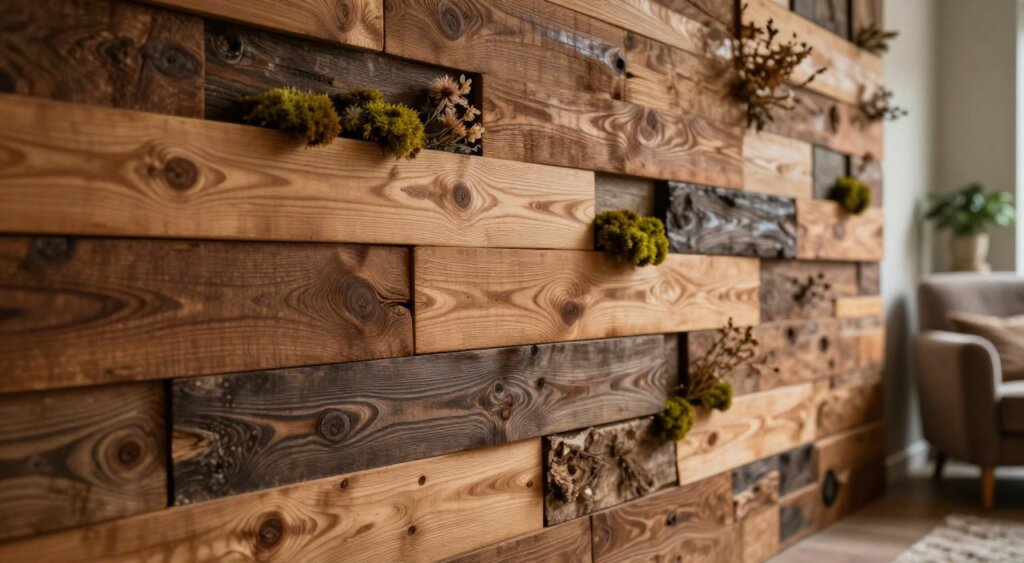
Reclaimed timber brings instant warmth and real character to a bedroom wall. It’s an easy route to add texture and make a bed feel grounded in the room.
Choosing safe reclaimed planks
Pick scaffold boards, vintage floorboards or pallet timber that look solid. Avoid chemically treated, damp or heavily split pieces. Check for nails, rot and loose knots before buying.
Sanding, sealing and finishing
Sand thoroughly to remove rough spots and splinters, and smooth edges where pillows touch. Seal with a clear matt oil or wax to cut dust traps and protect the surface from wear.
Installation and design options
Fix boards to battens, build a simple frame or make a removable panel that travels with you. Lay straight planks for a modern-rustic look, mix widths for vintage charm or cut a decorative silhouette for a bespoke finish.
| Board type | Pros | Check before buying |
|---|---|---|
| Scaffold planks | Strong, rustic texture | Surface treatment, straightness |
| Vintage floorboards | Patina, rich grain | Dryness, worm holes |
| Pallet timber | Cheap, readily available | Previous use, heat treatment mark |
To go bigger, cover the whole wall as a reclaimed wood feature wall and add positioned sconces for warmth. Maintain by dusting, checking fixings and resealing if humidity or wear appears.
Wainscoting, chevron panelling and custom wood detail
Carefully chosen panelling can turn a plain wall into a built‑in focal point that reads like quality joinery. In UK homes with simple plaster surfaces, this approach makes the area behind your bed feel intentional and premium.
V‑groove panelling with a slim shelf for reading
Run wall‑to‑wall V‑groove panels and top them with a narrow shelf. The shelf gives a tidy spot for bedside reading lamps, a cuppa or a framed photo without adding clutter.
Set the shelf height so you can sit up comfortably and read. Keep depth to around 10–12cm to avoid feeling intrusive.
Chevron detail for depth and modern accent
Cleverly cut chevron boards add depth and a contemporary accent. Measure carefully, use a level and dry‑fit rows so the angles stay true.
Painted panelling gives a crisp, contemporary style. Natural wood stains bring warmth and texture. For lighting, mount wall lights above the shelf, route cables neatly and place switches within arm’s reach from the bed.
| Feature | Best for | Key tip |
|---|---|---|
| V‑groove + shelf | Classic, functional | Shelf 10–12cm deep; seat‑height friendly |
| Chevron panelling | Modern, adds depth | Measure angles; dry‑fit before fixing |
| Paint vs stain | Contemporary vs warm | Paint for crisp lines; stain for grain and texture |
Upcycle doors, French doors and shutters for vintage character
Old doors and shutters can be reborn as a showstopping backdrop that adds real character to a bedroom. They become a striking headboard alternative and introduce architectural charm without new joinery.
Finding salvage pieces and prepping for a cleaner finish
Look in reclamation centres, salvage yards, antiques shops and online marketplaces across the UK. Check straightness, smell, rot, old paint and loose nails before you buy.
Remove handles, hinges and latches for a curated look. Fill holes with wood filler and sand smooth if you want a polished finish. Keep original patina if you prefer a rustic vintage feel.
Single door vs paired doors and mounting safely
One tall door suits a single or double bed; paired doors work best for king and super king widths. Note an interior door often measures about 80 inches high while a king bed is roughly 76 inches wide. Hang doors horizontally or pair them to balance scale.
Fix heavy pieces to studs or masonry with proper anchors, or build a freestanding frame if you rent. Bolt connections and a back cleat improve stability for a heavy furniture piece.
| Option | Best for | Key tip |
|---|---|---|
| Single door | Single / double beds | Centre over mattress; top sits 15–25cm above bed |
| Paired doors | King / super king | Align centre join with bed midline for cohesion |
| Horizontal hang | Low ceilings or wide frames | Use cleats and long fixings into studs |
Coastal headboard materials like driftwood, oars and paddles
Coastal materials bring a sense of calm and a lived-in holiday feel to any bedroom, even miles from the sea. Natural timber, reclaimed oars and simple paddles add texture and a light, informal aesthetic behind the bed.
Mounting painted oars for a bright, on-theme focal point
Arrange painted oars or paddles at staggered heights to form a playful, coloured focal point on the wall. Pick two or three palette shades and repeat them across the oars to tie the room together.
Mixing driftwood tones with neutral bedroom decor
Mix pale and darker driftwood pieces for depth, and keep bedding neutral so the textures stand out rather than compete. Repeat one driftwood tone in a lamp base or picture frame to make the scheme cohesive.
- Find studs where possible and use heavy-duty anchors for plasterboard.
- Sand sharp edges, seal driftwood with a clear matt finish and remove loose splinters.
- Source responsibly: salvage shops, online sellers or licensed beachcombing where allowed.
| Material | Look | Mounting tip |
|---|---|---|
| Painted oars | Bright, themed focal point | Fix with cleats into studs or long plugs for plasterboard |
| Driftwood planks | Textured, neutral backdrop | Attach to battens for a removable panel |
| Reclaimed paddles | Eclectic, staggered heights | Use wall anchors rated for leverage and length |
Soft statement alternatives like macramé, tapestry and cushions
If you prefer a gentler, tactile look, macramé, tapestries and mounted cushions are perfect picks. They add texture and colour to the wall without heavy carpentry or permanent fixes.

Macramé wall hangings for boho texture without heavy carpentry
Macramé works as a faux headboard that reads like crafted upholstery. Max Wanger shows many patterns and sizes that scale easily to mattress width.
Hang a wide piece from a single screw or a light wooden cleat to limit holes in rental walls. Choose natural fibres for a relaxed, tactile look and washable blends for easy care.
Tapestry styling for pattern, colour and a cosy reading nook vibe
A large tapestry gives bold pattern and instant colour. Country Living notes an antique tapestry tacked behind the bed can read as an upholstered panel.
Layer a simple painted shape behind a smaller tapestry for extra definition. Keep bedding simple when the wall is patterned, or choose a plain hanging if your linen already carries pattern.
Wall-mounted cushions on a pole for adjustable back support
Hang cushions with ties from a curtain pole as Ideal Home suggests. Adjust the height for comfortable reading and swap covers whenever you fancy a new look.
Pick cushions with good fill so they support your back. Use sturdy brackets for the pole and check weight limits to stop rattling against the wall.
| Option | Best for | Key tip |
|---|---|---|
| Macramé | Texture & boho style | Wide piece; single cleat fix |
| Tapestry | Pattern & colour | Layer with paint for depth |
| Cushion pole | Comfort & reading support | Use rated brackets; breathable fabric |
Conclusion
Simple upcycling and a few well-chosen DIY headboard ideas can lift your bedroom fast. Small changes — paint, fabric, reclaimed wood or art — make the bed wall feel considered and fresh.
Pick one project that suits your space and wall type. A quick diy headboard change with paint or a textile can be done in an afternoon, while doors or storage units take more time and fixings.
Measure carefully, use the right anchors and prep surfaces so the finish lasts for years. Doors, planks, wallpaper, art and soft hangings adapt to modern, vintage, coastal, boho or minimalist homes in the same practical way.
Next step: choose a colour palette, decide on storage or softness, gather materials and move the bed when you’re ready. These simple updates give old furniture new life and make your bedroom feel personal, practical and comfortable.





 call now