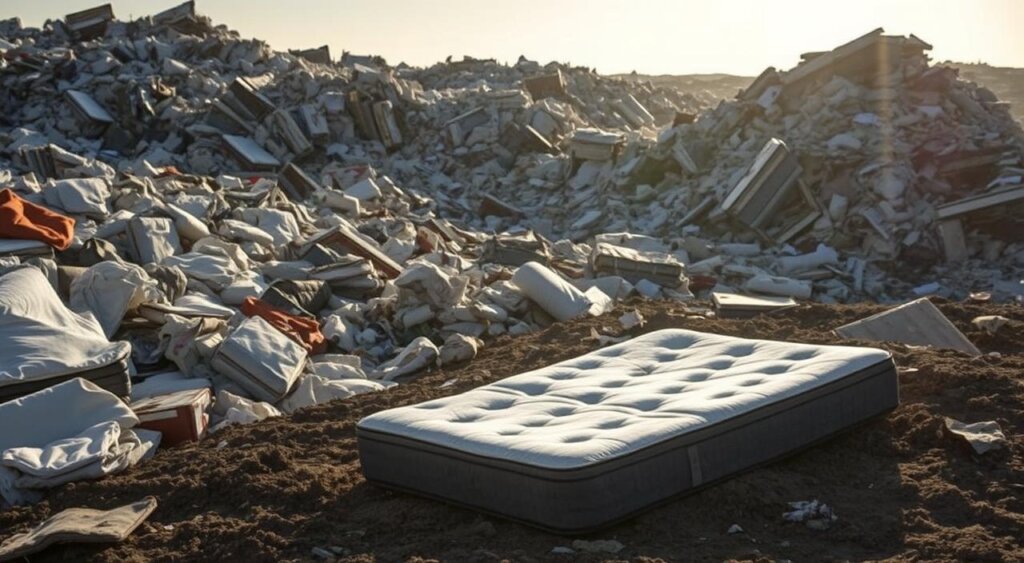
Every year in the UK, around 7 million mattresses are discarded. Only a fraction—about 25%—are recycled, while the rest end up in landfill. The mattress landfill problem is a growing environmental concern that most people overlook.
Understanding why mattresses are difficult to dispose of requires a basic look into materials science. These everyday products are not single-material items but multi-layered composites designed for comfort and durability, not disassembly. Each layer behaves differently under pressure, heat, and moisture, making recycling a serious technical challenge.
This article simplifies the science behind mattress waste. You’ll learn what happens to these bulky items after use, why their composition makes them problematic for recycling, and what you can do to ensure your old bed avoids the landfill.
Key Takeaways
- The UK discards around 7 million mattresses each year; 75% go to landfill.
- Only about one in four are successfully recycled.
- A mattress combines metals, foams, and textiles that are hard to separate.
- This complex structure causes most recycling systems to fail.
- Proper disposal helps conserve resources and prevent environmental damage.
The Environmental Cost of Mattress Waste
Landfill Overload and Pollution
Mattresses are bulky, rigid, and non-compactable. Unlike general household rubbish, they don’t compress well, which means each discarded mattress takes up excessive landfill space. Once buried, these layers of foam, metal, and fibre break down very slowly—often taking more than a decade.
During decomposition, chemical additives such as flame retardants, adhesives, and synthetic dyes can leach into the soil and groundwater. This contamination risks long-term ecological harm and increased waste management costs for local councils.
💡 According to the UK Environment Agency, persistent organic pollutants found in furniture and bedding materials must be handled separately to prevent environmental leakage.
Fire Hazards and Legal Penalties
Improperly dumped mattresses are not just eyesores—they are fire hazards. The mix of fabric and polyurethane foam fuels long-lasting fires in waste facilities and illegal dumpsites, releasing toxic fumes and greenhouse gases.
Under UK law, burning or fly-tipping a mattress is illegal. Offenders can face fines under the Environmental Protection Act and Clean Air Act. In London, penalties for illegal dumping can exceed £400 per incident.
| Environmental Impact | Primary Concern | UK Regulation |
|---|---|---|
| Landfill Space Use | Bulky, non-compactable waste | Landfill Tax applies |
| Chemical Leaching | Soil and groundwater contamination | Environmental Protection Act |
| Fire Hazards | Toxic smoke and long-lasting fires | Clean Air Act |
| Illegal Dumping | Visual blight, public cost | Fixed Penalty Notice fines |
Responsible mattress recycling prevents all these issues—protecting communities while reducing strain on local waste services.
What Makes Mattresses So Hard to Recycle
A Materials Science Perspective
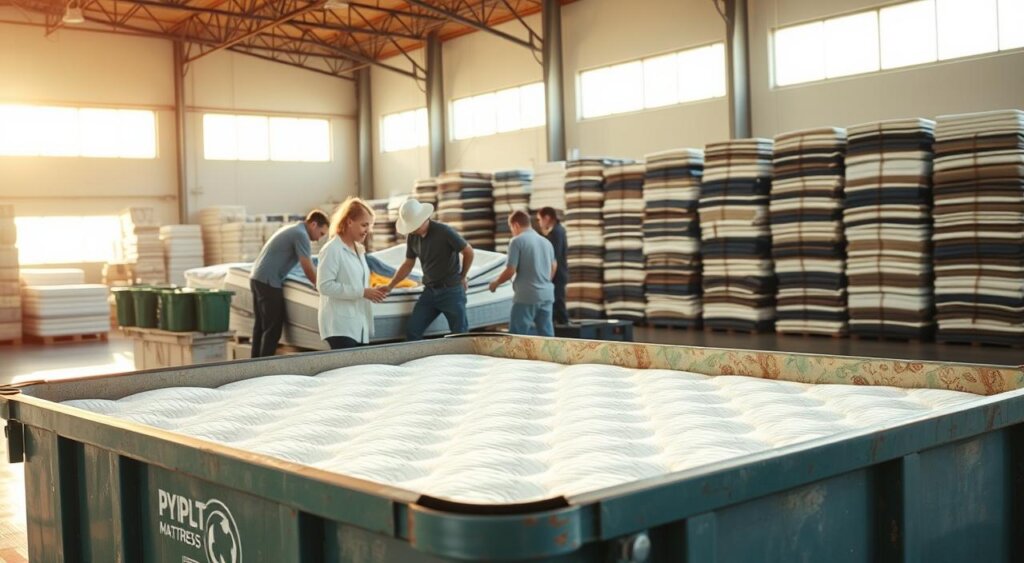
A typical mattress is a layered engineering structure, combining several materials that behave differently when compressed, heated, or chemically treated. These include:
- Foams (polyurethane or memory foam) – Soft, elastic materials that contain closed-cell air pockets.
- Metals (high-carbon steel coils) – Provide structure and bounce; recyclable but hard to separate.
- Fabrics (cotton, polyester, wool, viscose) – Add comfort but complicate sorting.
- Adhesives and flame retardants – Chemically bind layers but resist degradation.
These components are bonded tightly together, which makes manual separation costly and time-consuming. The adhesives used to join layers can release toxins when heated, meaning thermal recycling is limited.
Inside the Layers: How Each Material Behaves
| Component | Purpose | Material Challenge |
|---|---|---|
| Comfort Layer | Provides softness and shape | Foam resists shredding and clogs machinery |
| Spring Core | Offers support and bounce | Steel must be magnetically separated |
| Wadding & Fabric | Adds breathability | Mixed fibres hard to sort mechanically |
| Fire-Retardant Cover | Legal requirement | Contains chemicals unsuitable for composting |
The Science of Recovery: How Recycling Works
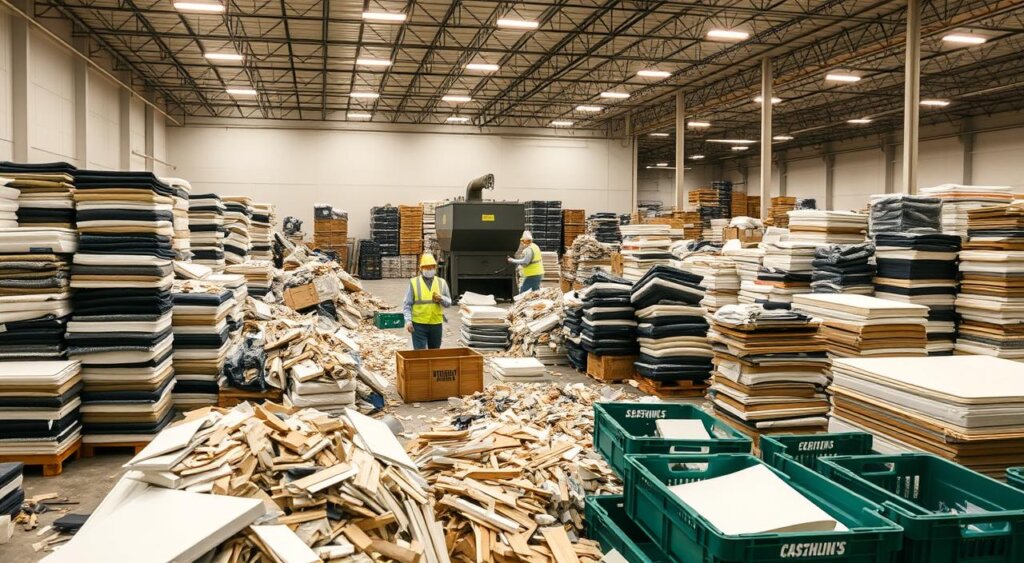
Modern recycling facilities use automated shredders and manual stripping to disassemble mattresses. Each recovered material is then channelled for reuse:
- Steel springs are melted and repurposed for new metal goods, consuming up to 75% less energy than producing virgin steel.
- Foam padding is granulated and turned into carpet underlay, soundproofing, or packaging.
- Fabrics and fibres may be cleaned and reused in insulation or industrial felt.
- Remaining residues are sometimes converted into refuse-derived fuel (RDF) for energy generation.
If handled properly, up to 85% of a mattress’s materials can be recovered, turning waste into valuable secondary resources.
How to Recycle Your Mattress Responsibly
1. Find Local Mattress Recycling Facilities
Start with your local council’s listings on GOV.UK. Most local authorities include details of approved recycling centres that accept mattresses.
- Bring-in recycling: Requires a vehicle large enough to transport the mattress.
- Council pickup: Most councils offer bulky waste collection for £10–£25 per item.
- Specialist contractors: Private recyclers may offer same-day collection and guarantee 100% landfill diversion.
2. Prepare Your Mattress Correctly
To ensure it’s accepted:
- Keep it dry, clean, and free of mould.
- Clear hallways and access paths for collection teams.
- Do not wrap it in plastic unless instructed—it slows down sorting.
Once collected, recyclers process the mattress through shredding or dismantling systems to separate the components for reuse.
| Disposal Method | Key Requirement | Best For |
|---|---|---|
| Take to Recycling Centre | Vehicle access | People with transport |
| Council Collection Service | Pre-book online | Households without vans |
| Specialist Processor | Clean, dry item | Maximum material recovery |
Alternative Options Beyond Recycling
Sell or Donate
If your mattress is still in good condition—firm, unstained, and less than 5 years old—you can resell or donate it instead of recycling.
- Sell online: Use marketplaces such as Gumtree or Facebook Marketplace. Clean it thoroughly and price it at 20–30% of the original cost.
- Donate to charities: The British Heart Foundation and Zarach accept used beds that meet fire-safety standards. Zarach supports UK families in bed poverty, offering collection from your home.
Use Retailer Take-Back Programs
Many retailers, including Dreams and IKEA, run take-back schemes where they collect your old mattress upon delivery of a new one. These partnerships often guarantee zero-landfill outcomes through certified recycling partners.
♻️ When buying a new mattress, always ask the retailer about collection options. It’s a convenient, environmentally responsible choice.
Avoid Skip Hire
Although convenient, hiring a skip is one of the least sustainable disposal methods. Mattresses dumped in skips typically go directly to landfill and can attract fines if the waste type isn’t declared.
| Disposal Route | Best For | Environmental Impact |
|---|---|---|
| Selling/Donating | Reusable items | Positive – extends lifespan |
| Retailer Take-Back | Worn-out mattresses | Positive – ensures recycling |
| Skip Hire | Any item | Negative – often landfill |
Education and Awareness: The Way Forward
The mattress landfill problem highlights how small consumer decisions connect to larger environmental systems. Increased awareness among households can significantly reduce landfill strain.
- Choose recyclable designs: Look for mattresses labelled as “modular” or “easy disassemble.”
- Support circular economy initiatives: Brands offering buy-back or refurbishment help close the loop.
- Promote local recycling programs: Encourage councils to invest in specialised mattress recovery lines.
You can explore educational resources on sustainable living and waste management at Recycle Now, a UK government-backed platform promoting national recycling standards.
Conclusion
Understanding the materials science behind mattresses reveals why they’re so problematic in landfills—and how recycling them makes a difference. These products aren’t designed with end-of-life recovery in mind, which is why so many end up buried rather than reused.
By opting for responsible disposal—through council services, retailer take-back programs, or charities—you play an active role in the circular economy. Each correctly recycled or donated mattress prevents hazardous chemicals from entering the soil, saves raw materials, and reduces carbon emissions from new manufacturing.
The next time you replace your bed, think beyond comfort. Your decision on disposal directly affects the planet’s health.





 call now