Mattress recycling UK has become an essential environmental topic. Each year, more than 8.5 million mattresses are discarded nationwide, and most still end up in landfill. By choosing a professional recycling service and an easily recyclable design, you can help turn waste into valuable new resources.
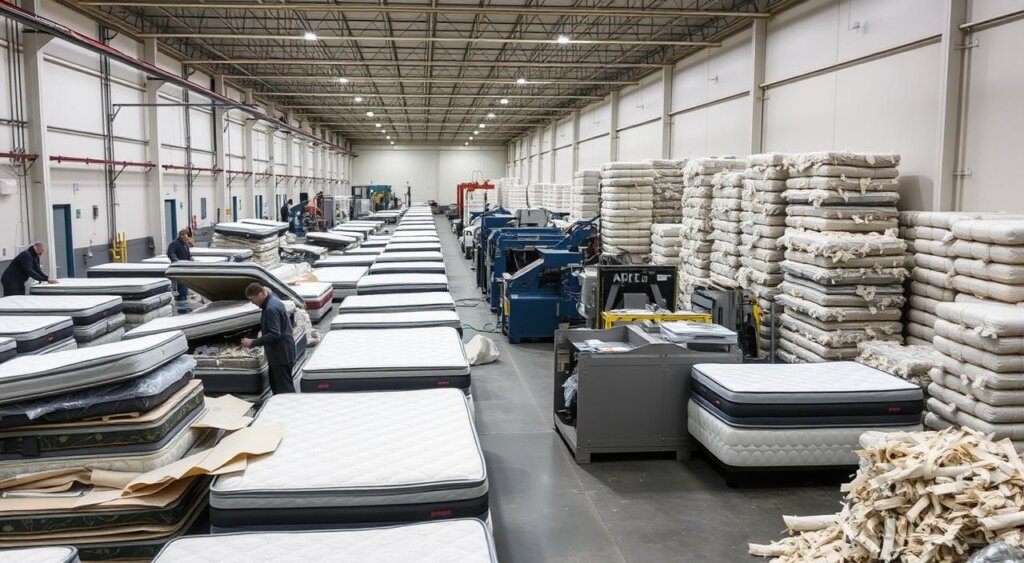
Not all sleeping products are created equal when it comes to recyclability. The construction of a pocket spring, memory foam, or hybrid mattress determines how efficiently its materials can be separated and reused. This comprehensive guide to mattress recycling in the UK explains how the process works, compares key designs, and highlights the benefits of sustainable disposal.
Key Takeaways
- Over 8 million mattresses are discarded yearly in the UK, contributing heavily to landfill waste.
- Professional collection services can recover up to 98 percent of materials.
- A mattress’s design affects its recyclability — pocket spring models are the easiest to process.
- Choosing highly recyclable options reduces landfill waste and supports the circular economy.
- Understanding your disposal options helps you make a responsible, sustainable choice.
Understanding Mattress Recycling in the UK
The UK’s mattress recycling sector has expanded rapidly to meet strict environmental targets. Instead of treating an old bed as rubbish, recycling facilities dismantle it into reusable parts such as steel, foam, and textiles. This process forms part of the country’s broader circular economy strategy, aiming to keep materials in use for as long as possible.
What Is Mattress Recycling?
Mattress recycling is the process of deconstructing sleeping products into their core materials — rather than sending them to landfill. These materials are cleaned, processed, and converted into new raw components for manufacturing.
This sustainable approach supports carbon reduction goals by replacing the need for virgin resources such as mined metals and newly manufactured foams.
The Recycling Process: Step-by-Step
- Collection and Transport – Old mattresses are collected by licensed waste carriers and taken to recycling facilities.
- Inspection and Sorting – Each item is checked for contaminants or hazardous materials.
- Dismantling – Skilled technicians separate layers using specialised tools.
- Material Recovery – Components are grouped by type — metal, foam, and textiles — for further processing.
- Reuse or Energy Recovery – Recovered materials are repurposed for manufacturing or used for renewable energy generation.
| Material Type | Recycling Process | Common New Products |
|---|---|---|
| Steel springs | Melted and reformed | Tools, appliances, new bed frames |
| Foam padding | Shredded or used for energy | Carpet underlay, gym mats |
| Textiles & fabric | Cleaned and repurposed | Insulation, industrial stuffing |
In some cases, contaminated foam that cannot be reused undergoes energy recovery, where it’s safely combusted to generate electricity. This ensures zero-to-landfill outcomes.
Mattress Recycling in London: How It Works
London leads the UK’s sustainable disposal efforts with an extensive network of collection and processing partners.
Booking and Collection
Residents can easily arrange pickup through licensed mattress removal companies. Bookings are made online, with same-day or next-day slots available. Teams collect items directly from your home — even from upper floors — saving you the effort of transporting bulky waste.
💡 Tip: Always check that your chosen provider is Environment Agency licensed to ensure full compliance and traceability.
Processing and Recovery
Once collected, mattresses are delivered to specialised recycling centres across Greater London. Here, components are dismantled, sorted, and prepared for reuse.
Recycling steel, foam, and textiles not only prevents landfill build-up but also creates new local manufacturing jobs. Each recovered mattress saves around 23 kg of CO₂ emissions compared to landfill disposal.
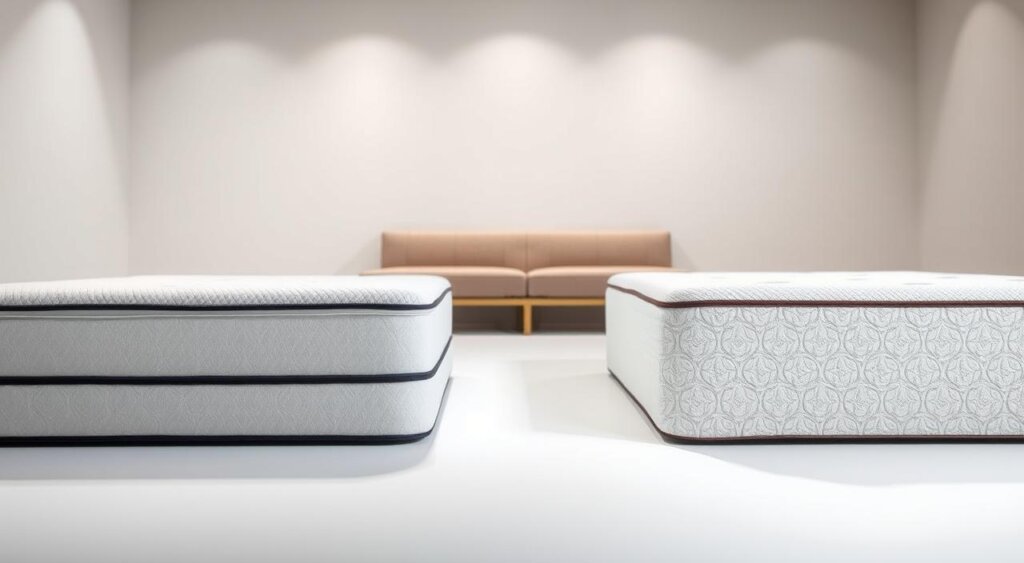
Comparing Pocket Spring, Memory Foam, and Hybrid Mattresses
Each mattress type presents unique advantages and challenges in the recycling process. Understanding these differences helps consumers make sustainable purchasing choices.
Pocket Spring Mattresses
Pocket spring mattresses are among the most recyclable types available. Their construction features hundreds of individually wrapped steel coils surrounded by layers of natural or synthetic padding.
Why They Recycle Well:
- Steel springs are valuable scrap metal.
- Layers can be mechanically separated with minimal contamination.
- Many models use cotton or wool fillings, which can be repurposed for insulation or upholstery.
Recovery rate: ~90–95 percent Best for: Consumers seeking both comfort and high recyclability.
Memory Foam Mattresses
Memory foam mattresses, popular for pressure relief and comfort, are made from polyurethane foam, a petroleum-based material. Unfortunately, they pose the greatest recycling challenge.
Why They’re Difficult to Recycle:
- Foam density makes separation labour-intensive.
- Contaminants such as adhesives or odours limit reuse.
- Many facilities opt for energy recovery rather than physical recycling.
Recovery rate: ~60–70 percent Common reuse: Shredded foam for carpet underlay or incineration for energy.
While these mattresses excel in comfort, they rank lowest in sustainability unless paired with take-back schemes.
Hybrid Mattresses
Hybrid mattresses combine springs and foam layers, offering the best of both worlds for comfort but posing medium-level recycling complexity.
Facilities must separate materials carefully to avoid contamination. However, with improved dismantling technology, recovery rates now reach 80–85 percent.
| Bed Type | Separation Difficulty | Material Recovery Rate | Recycled Outputs |
|---|---|---|---|
| Pocket Spring | Low | 90 % + | Metal goods, insulation |
| Memory Foam | High | 60–70 % | Carpet underlay, energy |
| Hybrid | Medium | 75–85 % | Mixed reuse materials |
Hybrid models are a solid eco-friendly compromise for buyers who prioritise comfort but still want a lower environmental impact.
Environmental and Economic Benefits

Reducing Landfill Waste
Mattresses take up to 80 years to decompose. During that time, they release methane and toxic leachates that contaminate soil and groundwater. Recycling prevents these emissions and saves enormous landfill space.
In fact, if every discarded UK mattress were recycled, the country could avoid over 200,000 tonnes of waste annually — equivalent to the weight of 30,000 double-decker buses.
Saving Resources and Energy
Producing new steel or foam requires high energy inputs. Recycling these materials consumes up to 70 percent less energy and drastically reduces carbon emissions.
Cost-Effectiveness
Professional mattress recycling offers a better cost-to-value ratio than skip hire or council fees. Many collection companies provide transparent pricing and bundle services with new mattress deliveries.
| Aspect | Landfill Disposal | Professional Recycling |
|---|---|---|
| Environmental cost | High pollution risk | Minimal impact |
| Consumer price | Variable, often higher | Fixed, affordable |
| Legal compliance | Risk of fines | Fully licensed |
| Material outcome | Wasted | Reused or repurposed |
Choosing a professional service protects you from illegal fly-tipping fines and ensures that your mattress contributes positively to the environment.
Tips for a Hassle-Free Mattress Collection
1. Choose the Right Service
Look for a licensed waste carrier with clear recycling policies. Reputable companies display their Environment Agency registration number on their website.
Mattress collection and disposal services in London – trusted professionals offering eco-friendly removal.
2. Prepare the Mattress
- Remove bedding and accessories.
- Clear hallways for easy access.
- Inform the provider if the mattress is on an upper floor or in a tight space.
3. Schedule Conveniently
Most services offer flexible pickup slots, including weekends. Some retailers even include free collection when you purchase a new bed.
| Booking Option | Best For | Key Advantage |
|---|---|---|
| Free with new purchase | Buying replacement mattress | Hassle-free and cost-effective |
| Standalone collection | Old mattress only | Flexible scheduling, no purchase needed |
How to Make Your Next Mattress More Sustainable
- Research manufacturer take-back schemes – Brands like Silentnight and Emma now operate recycling programmes.
- Check for eco-certifications – Look for OEKO-TEX® or CertiPUR-EU foams that meet environmental standards.
- Opt for natural fillings – Wool, cotton, and hemp are biodegradable and easier to recycle.
- Buy modular mattresses – Some designs allow component replacement instead of full disposal.
By considering the product’s end-of-life journey before buying, you directly contribute to reducing the UK’s waste footprint.
Real Examples of Circular Economy Success
The Recycling Lives initiative, supported by UK councils, processes over 300,000 mattresses annually, transforming metal and foam into new products like gym mats and insulation. This closed-loop system demonstrates how discarded materials can re-enter the economy instead of being wasted.
The Furniture Recycling Group (TFR Group) and Recycling Lives UK recover hundreds of thousands of mattresses annually, transforming steel and foam into new consumer products.
Learn more about The Furniture Recycling Group
Conclusion
Mattress recycling UK proves that sustainability can be both practical and affordable.
- Pocket spring designs offer the best recovery rates.
- Hybrids balance comfort and eco-efficiency.
- Memory foam remains challenging but still contributes via energy recovery.
By choosing professional recycling over landfill, you help protect natural resources, cut emissions, and support green jobs.





 call now