This guide explains what an eco-friendly organic mattress protector does: it is the thin, breathable layer between you and the mattress that keeps your bed cleaner and extends comfort.
We will cover materials such as cotton, wool and waterproof membranes, plus certifications, fit and care. You will get a shortlist of the best eco options to buy in the UK in 2026.
Choosing greener options matters. Fewer harsh synthetics touch your skin, your mattress can last longer, and less waste reaches the planet over time.
This guide suits hot sleepers, families, allergy-prone users, anyone with an older mattress and those who dislike the old-school plastic feel. Key choices include water-resistant versus fully waterproof and encasement versus fitted styles.
Expect practical takeaways on reading labels, which certifications carry weight, and how to choose the right size and depth so you buy with confidence.
Key Takeaways
- Understand the main materials and their benefits.
- Decide between water-resistant and fully waterproof.
- Look for trusted certifications when shopping.
- Choose encasement for full coverage or fitted for comfort.
- Match depth and size to your bed for a secure fit.
Why an eco-friendly mattress protector is worth it for your bed and the planet
A thoughtful, eco-friendly cover does more than keep stains off the sleep surface. It acts as a low-effort shield that takes daily wear so you don’t need to spot-clean or replace a full mattress as often.
Protecting from sweat, body oils, spills and everyday wear
Sweat, body oils and small spills build up slowly. A dedicated protector absorbs or repels these so the core mattress stays cleaner.
That means fewer deep cleans and less risk of staining that can void a warranty or force an early replacement.
Extending mattress life by years with the right layer
A sacrificial layer is easier to wash than the mattress itself. Woolroom notes a wool cover, cared for correctly, can prolong a wool mattress by 2–3 years.
Good-quality mattress protectors can last several years with proper care, so durability is part of being eco-friendly — fewer replacements, less waste and fewer deliveries over the product life.
Reducing exposure to harsh synthetics in your bedding setup
Modern protectors often avoid old PVC-style plastics, cutting contact with harsher synthetics against skin. For sleepers who prefer a natural feel, this is a simple way to improve nightly comfort.
Remember: labels that say “non-toxic” or “organic” do not guarantee standards. Later sections show which certifications and constructions genuinely matter.
Organic mattress protector: what “organic” and “non-toxic” really mean in 2026
Shopping for a truly “organic” cover means looking past marketing and checking trusted certifications. Labels like GOTS and other third‑party marks tell you more about the whole product than a vague claim does.
Certified organic cotton and why GOTS matters
GOTS‑certified organic cotton covers standards from farm to factory. It limits harmful chemicals and requires social and environmental oversight. That protects both the fibre and the processing steps that touch your skin.
Beyond “natural”: tighter non‑toxic signals
Look for MadeSafe or Greenguard Gold when you want tighter chemical screening and low emissions. These badges mean independent testing for chemicals and indoor air quality.
Climate Neutral Certified signals a brand measures and offsets its emissions. That appeals to buyers who want lower lifecycle impact, not just greener labels.
Fabric choices: jersey, percale and woven cotton
Organic cotton jersey is stretchier and hugs the base, ideal if you want less shifting. Percale feels crisp and cool; it suits hot sleepers. Standard woven cotton sits between the two for everyday comfort.
- Choose jersey for stretch and a snug fit.
- Pick percale for cooler, crisper sleep surfaces.
- Select GOTS-certified organic cotton when you want assurance across the supply chain.
Remember: “organic” does not automatically mean waterproof. Construction—such as added membranes—decides spill protection, which we cover next.
Material matters: cotton, wool and waterproof membranes compared
Choosing the right materials changes how your bed feels, breathes and handles spills.
Organic cotton protectors for breathable, lightweight comfort
Cotton gives light breathability and a close-to-bed feel. It suits most sleepers who want a natural touch without added bulk.
Organic cotton thin covers work well for sweat and daily wear. They rarely change the feel of your base and wash simply.
Wool benefits: moisture-wicking, temperature regulation and comfort
Wool helps keep you warm when chilly and cool when hot. It draws moisture away to reduce clammy sleep, so nights feel fresher.
A wool mattress protector also adds soft padding and natural thermoregulation, useful for varying UK seasons.
Waterproof options: thin layer polyurethane or TPU and what that means for sleep
“Waterproof” usually means a very thin polyurethane or TPU membrane. This blocks liquid while still allowing some vapour to pass.
LeafScore notes these thin layer polyurethane membranes differ from PU foam and generally don’t off-gas or leach chemicals. Pairing a membrane with natural fibres improves comfort.
Sandwiched organic cotton layers: keeping waterproofing away from skin contact
Some designs use sandwiched organic cotton so the membrane sits between cotton layers. That keeps the waterproof layer off the skin.
Quick comparison:
- Cotton — light, breathable, everyday defence against sweat.
- Wool — moisture-wicking and temperature control for less clammy nights.
- Membrane-backed — true waterproofing when accidents or heavy spills are a worry.
Wool mattress protectors and allergies: dust mites, mould and hypoallergenic performance
Bedrooms often become allergy hotspots because warm, humid microclimates and settled dust create ideal conditions for sensitised sleepers.
Wool can help here. It sits between you and the sleep surface and reduces what settles into the mattress over time. That lowers the build-up of dust and can limit the growth of mould in damp conditions.
How a wool layer acts as a barrier against dust mites and allergens
A natural wool layer traps loose particles and makes it harder for dust mites to burrow into the mattress. Wool mattress protectors from reputable makers provide a physical barrier that reduces exposure to dust mite allergens and fungal spores.
Woolroom states its natural protectors are Allergy UK approved as effective barriers against dust mites, dust mite allergens, fungus and mould. That independent approval matters when you need proof beyond a label.
What credible “hypoallergenic” claims should look like
Hypoallergenic should mean independent testing or a recognised endorsement, not just marketing copy. Look for tight weaves, sound stitching and designs that can be washed easily to keep bedding fresh.
- Choose tightly woven covers to reduce dust entry.
- Prioritise quality stitching and washable designs for hygiene.
- Keep expectations realistic: a protector helps, but regular cleaning and good ventilation remain essential.
Allergy concerns can also influence whether you pick a fitted style or full encasement, which we cover next.
Choosing the right level of protection: water-resistant vs fully waterproof
Not all covers aim to stop every spill — pick one that matches your daily reality. Below is a practical way to choose between light resistance and full leak defence.
When wool or cotton is enough
Wool and cotton cope well with night sweats and small spills you blot quickly. They keep feel and breathability high and minimise synthetic contact.
LeafScore notes fully natural wool/cotton options can handle minor leaks but are not fully waterproof. Choose these if you value natural fibres and low-synthetic feel.
When you’ll want fully waterproof protection
Use a waterproof mattress protector for potty training, pets, incontinence or illness. These protect high-value beds from deep stains and reduce stress after accidents.
Membrane-backed designs pair a thin PU or bioplastic layer with cotton or wool to block liquid while keeping a natural surface feel.
Encasement vs fitted style
Fitted styles cover the top and sides. Encasements fully wrap the bed and can add defence against dust, mites and bed bugs when the membrane seals the seams.
- Match protection level to your household habits, not your ideal routine.
- The best pick depends on certifications, feel and how much spill risk you face.
Best eco-friendly mattress protectors to buy in the UK right now
Here are the top eco-friendly picks available to UK buyers right now, chosen for certifications, comfort and real-world protection. Each option is available for delivery in the UK and is compared by certification strength, feel and level of spill defence.
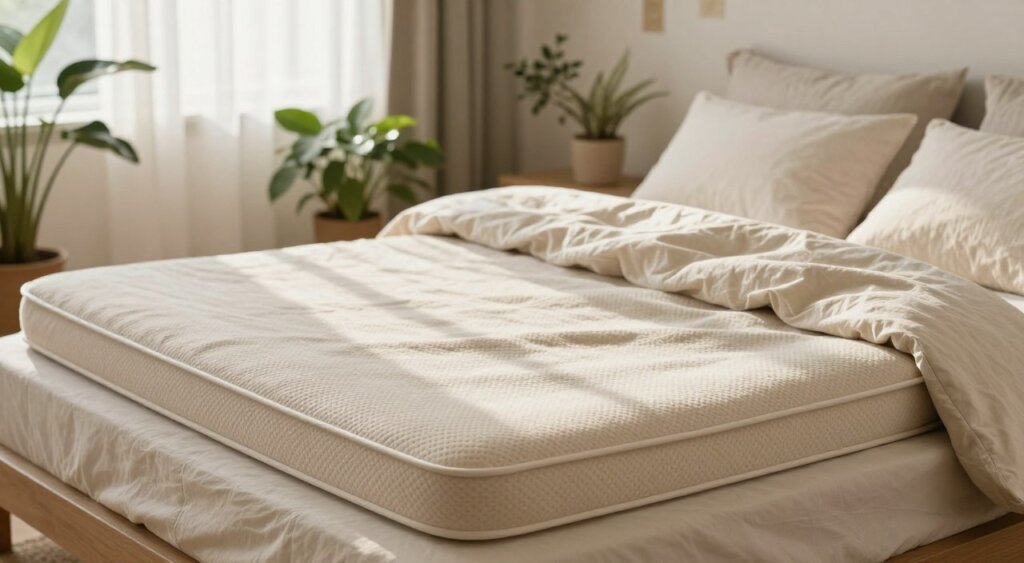
Best overall: 100% organic cotton waterproof option with strong certifications
LeafScore Essentials is the archetype here. It uses 100 organic cotton with a very thin PU laminate (
GOTS and Fair Trade labels, full waterproof performance and machine washability make it a reliable long‑term buy for high-value beds.
Best climate-conscious pick: breathable, noiseless and certified
Avocado combines GOTS, MadeSafe, Greenguard Gold and Climate Neutral Certified status. It is designed to be breathable and quiet in use.
Choose this if you prioritise low emissions and a sleep surface that won’t rustle or trap heat.
Best budget-friendly certified option
Naturepedic’s option uses organic cotton jersey and a thin TPU layer. Certifications include GOTS, MadeSafe and Greenguard Gold.
It’s a strong value choice when price matters but you still want verified standards and a snug fit.
Best wool hybrid: comfort plus waterproofing
Turmerry layers wool fibre fill with a PU membrane under a percale cotton cover. It aims to combine wool’s comfort with true waterproof performance.
Expect gentle cushioning without bulk and useful breathability for year‑round sleep.
Best plastic-free approach: washable wool, naturally water-resistant
Shepherd’s Dream offers a washable wool mattress that beads light spills and resists moisture naturally. It is durable and chemical-free.
Note: it is water‑resistant rather than fully waterproof, so it suits those avoiding PU/TPU and who can manage heavier incidents differently.
| Model | Certifications | Key benefit | Waterproof level |
|---|---|---|---|
| LeafScore Essentials | GOTS, Fair Trade | 100 organic cotton, machine washable | Full |
| Avocado | GOTS, MadeSafe, Greenguard Gold, Climate Neutral | Breathable, noiseless | Full |
| Naturepedic | GOTS, MadeSafe, Greenguard Gold | Value, jersey fit | Full |
| Turmerry | Oeko‑Tex / GOTS facility | Wool fill + waterproof membrane | Full |
| Shepherd’s Dream | Independent wool standards | Washable wool, plastic-free | Partial |
Price varies by size and depth. Watch for seasonal sale windows and compare cost per year using warranty and expected durability. Pick based on household needs — kids, pets or allergies — and your preferred feel: cool percale, stretchy jersey or cushioned wool.
How to choose the best fit for your mattress: sizes, depth and staying power
Getting the right fit is a small step that makes a big difference to how your bed behaves. A well-sized cover keeps bedding smooth and reduces nightly fuss.
Mattress depth ranges and why “deep pocket” matters
Measure length, width and depth including any topper. Write down whether you need extra side coverage for children or pets.
- Measure mattress width and length.
- Measure depth with topper in place.
- Decide if extra side coverage is needed for movement or young children.
Deep pockets stop pop-offs. Too shallow and the cover slips; too deep and it can bunch. Avocado’s standard fit (6–16″) and deep option (up to 22″) are a useful benchmark.
Corner elastics, loops and side coverage
Full fitted skirts tend to stay put. Corner elastics or loops are easy to remove but may give less side protection, as seen with Shepherd’s Dream-style designs.
Matching fabric and bedding layers
Organic cotton jersey stretches for a snug feel. Woven cotton feels smoother but can be less forgiving on tall bases.
Layer in this order: mattress → protector → topper (if used) → fitted sheet. Too many layers reduce breathability, so balance comfort with airflow.
| Attachment | Pros | Cons |
|---|---|---|
| Full fitted skirt | Secure, good side coverage | Less easy to remove |
| Corner elastics/loops | Quick to fit and launder | Less side protection |
| Encase style | Complete wrap, anti-allergen | Hotter for some sleepers |
For restless sleepers favour strong elastic and good side coverage to avoid slipping and noise. Always check UK size charts (Single/Double/King/Super King) and depth ranges before buying to get the right fit.
Care, washing and durability: getting years of life from your protector
Caring for your bed cover correctly is the single best way to protect its performance and extend its useful life.
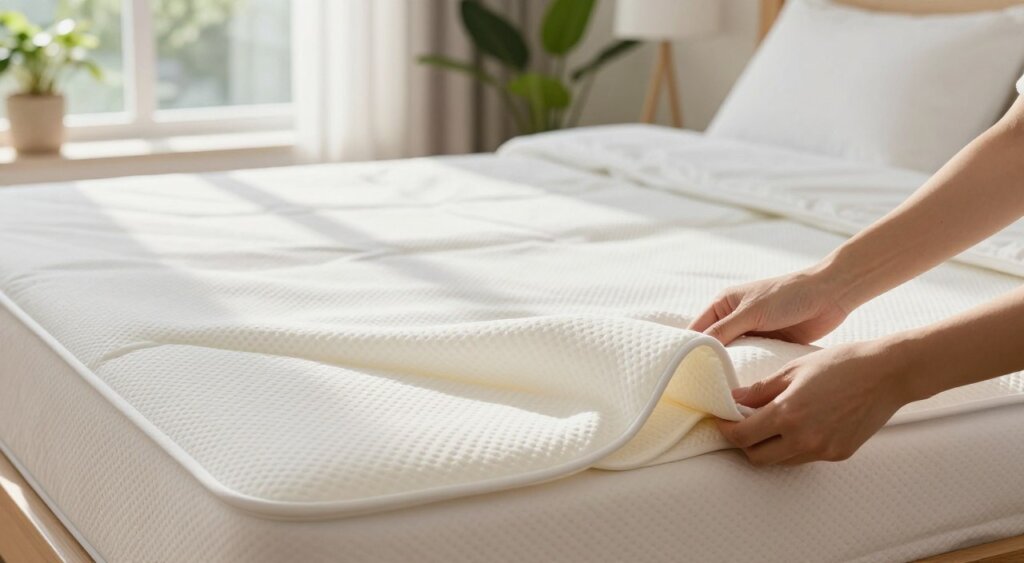
Washable wool guidance
Woolroom advises using a wool cycle and a gentle wool detergent. Wash less often: wool resists odours and manages moisture naturally.
Machine-washable waterproof covers
Follow the label to protect any membrane. Avoid bleach, high heat and aggressive detergents so waterproof layers stay intact.
Routine checks and when to replace
- Inspect seams and elastic after heavy washing or long use.
- Replace when you see cracking, delamination, persistent damp or stretched elastic.
- Punctures or lost waterproofing mean the cover no longer does its job and should be swapped out.
Keeping it quiet and comfortable
Choose quality fabrics and sandwiched constructions to avoid the crinkly, sweaty feel of older PVC designs. Modern options aim to be breathable and noiseless at night.
| Sign | What it means | Action |
|---|---|---|
| Visible cracking | Membrane failure | Replace promptly |
| Persistent damp | Lost waterproofing | Do not reuse |
| Stretched elastic | Poor fit | Replace or repair |
With simple washing routines and periodic checks, a good cover can last several years and save you money over one shorter-lived purchase.
Conclusion
Begin by matching how you live — and sleep — to the protection level and fabric you choose.
First pick the right defence: light water resistance for everyday sweats or full waterproofing for frequent accidents. Then choose material that suits temperature and feel, and finally check fit and care instructions you can follow.
UK shoppers should prioritise trusted third‑party standards, correct size and depth, and washing guidance that fits their routine. These checks protect your bed and keep performance reliable.
Who buys what? Choose wool or cotton for breathable, day‑to‑day defence. Go for membrane‑backed options when spills are common. Use an encasement for maximum barrier protection — and pick a protector you enjoy sleeping on.
Small choices add up: a well‑fitting, comfortable cover keeps your mattress in use longer and helps the planet by cutting waste.





 call now